The Solar Innovator System review examining the advertised spherical solar design, construction costs, and electricity-savings claims.
The Solar Innovator System is a digital DIY solar guide marketed to people who want to build a compact, sphere-shaped solar energy device using illustrated instructions, blueprints, and a materials list. The sales page claims that its unusual design can capture sunlight from multiple angles and significantly reduce household electricity bills. But how much of that promise is supported by evidence? This Solar Innovator System review examines the advertised materials, price, bonuses, refund policy, and the difference between legitimate spherical solar research and the seller’s unverified performance claims.
The Solar Innovator System is not a finished solar generator or a physical kit shipped to your home. It is promoted as a downloadable information package that teaches buyers how to construct a device themselves. The seller advertises a build cost below $200, a short assembly time, and substantial electricity savings. These figures are marketing claims and have not been independently confirmed for this specific design.
In this Solar Innovator System review, we look at what the digital product promises, what buyers may need to spend beyond the purchase price, and why independent performance data matters before relying on any DIY solar design for household electricity.
Research-Based Review:, Based on published product information and research, we have not independently tested this product.
Quick Review: The Solar Innovator System
| Product type | Digital DIY solar guide |
|---|---|
| Listed price | $39; confirm the current checkout price |
| Main concept | A sphere-shaped solar assembly designed to capture sunlight from multiple angles |
| Advertised contents | Video guides, illustrated instructions, blueprints, and a materials list |
| Estimated build cost | Seller advertises costs below $200; actual expenses may vary |
| Advertised support | Unlimited lifetime email support |
| Refund policy | 60-day money-back guarantee advertised by the seller |
| Independent testing | Not performed for this review |
| Our assessment | Consider it an educational DIY concept, not a proven whole-home power solution |
Product details are based on the supplied sales material and published reporting. Verify the current offer, included files, support terms, and refund conditions before purchasing.
What Is The Solar Innovator System?
The Solar Innovator System is marketed as a digital guide for constructing a compact solar device with a rounded, three-dimensional arrangement of photovoltaic cells. The sales presentation attributes the concept to a person named Mark Pierce and describes a design intended to collect sunlight from different directions throughout the day.
According to the seller, the downloadable package includes construction instructions, blueprints, a materials list, and video guidance. Buyers are expected to source the physical components separately and assemble the device themselves.
The main idea is to arrange solar cells in a shape that can receive light from more angles than a conventional flat panel facing one direction. This is an area of legitimate engineering research: spherical and other three-dimensional photovoltaic configurations have been studied for their ability to collect sunlight at varying angles.
However, the fact that a general concept has scientific merit does not prove that every DIY version performs as advertised. The specific output, durability, cost, and real-world savings of the Solar Innovator System would need to be demonstrated through repeatable testing.
What Does The Solar Innovator System Include?
The sales page advertises a digital package designed to guide buyers through the proposed construction process. Here is what the seller says is included.
1. Step-by-Step Video Guides
The Solar Innovator System is promoted as including video instructions that walk buyers through the proposed build. The seller describes the videos as beginner-friendly and intended to make the construction process easier to follow.
Video demonstrations can help explain how components fit together, but they cannot independently establish how much electricity a completed device will produce. Buyers should look for clear specifications, electrical diagrams, and credible measurements rather than relying only on a visual demonstration.
2. Blueprints and Illustrated Instructions
The package is advertised as including blueprints and illustrated construction instructions. These are intended to show how the spherical structure is assembled and where the solar components are positioned.
The practical value of these documents depends on their completeness, technical accuracy, and compatibility with the materials available to the buyer. We have not independently inspected the full paid guide or verified that its instructions reproduce the advertised performance.
3. Materials List
The seller says the guide includes a materials list to help buyers source the components required for the project. Its sales page estimates that a build can be completed for less than $200, although different sections of the promotional material give different cost estimates.
That estimate should be treated as a seller claim rather than a guaranteed total. Actual costs may depend on the number and quality of solar cells, the frame, reflective components, wiring, connectors, tools, mounting hardware, and any additional safety equipment.
4. Digital Access
The Solar Innovator System is presented as a digital product. The sales page says the materials can be accessed using a computer, tablet, or smartphone.
The product images are promotional visualizations; purchasing the guide does not mean a completed spherical solar generator will be delivered. You would need to buy the physical materials separately and undertake the construction yourself.
How Does the Spherical Solar Concept Work?
Conventional flat solar panels generally produce their best output when sunlight strikes them at a favorable angle. As the sun moves across the sky, the angle of incoming light changes, affecting the power a panel can produce at any given time.
A three-dimensional arrangement of photovoltaic cells can receive sunlight from multiple directions. Depending on its shape, cell coverage, orientation, reflective surfaces, weather, and installation, such a design may collect light at times when a single flat surface is less favorably positioned.
Researchers have studied spherical and other three-dimensional solar designs, and some experiments report improved energy collection under specific conditions. The results depend on the particular design and how the comparison is performed.
That does not mean a spherical device automatically generates more total electricity than every conventional solar installation. A fair comparison needs to consider the number and type of solar cells, the actual illuminated area, shading, orientation, conversion losses, and measured energy over time.
Are The Solar Innovator System’s 101% Power Claims Verified?
This is one of the most important questions in this Solar Innovator System review. The sales material claims that its design can deliver substantially more power than traditional flat panels and advertises dramatic reductions in electricity bills.
Published research has investigated nature-inspired and spherical photovoltaic designs. However, a research result obtained with a particular laboratory device does not establish that a separate DIY product will achieve the same result using its own components and construction method.
To verify the Solar Innovator System’s claims, independent testing would need to document the finished device’s electrical output, the amount and type of solar material used, weather and sunlight conditions, the comparison panel, and the total energy generated over a meaningful period.
We did not find independently verified performance data for the exact DIY build that establishes the seller’s advertised whole-home power claims or promised savings. The product’s promotional statements should therefore not be treated as guaranteed results.
There is an important difference between demonstrating that a spherical solar design can collect sunlight and proving that a small DIY device can reliably power a refrigerator, air conditioner, or an entire household. Those applications require appropriate power output, electrical controls, and often energy storage and professionally designed installation equipment.
Can The Solar Innovator System Reduce Your Electricity Bill?
The seller advertises electricity-bill reductions of 50%, 80%, or more. The sales presentation also describes the device as a way to reduce dependence on conventional utility power.
Those savings figures have not been independently verified for this particular product. A realistic savings estimate would require measured energy production and a comparison with the household’s actual electricity consumption. It would also need to account for installation, maintenance, replacement components, and any energy storage or electrical equipment required.
A compact DIY solar device may be useful for learning about photovoltaic technology or experimenting with small loads, if built safely and correctly. That is very different from establishing that it can meet a home’s heating, cooling, refrigeration, and general electrical needs.
If your main goal is to lower your electricity bills, compare options with published performance specifications and credible cost estimates. Depending on your circumstances, these may include energy-efficiency improvements, commercially tested solar panels, or a professionally designed solar-and-battery system.
The Solar Innovator System Pros and Cons
Potential Advantages
- Structured learning materials: The advertised package brings videos, instructions, blueprints, and a materials list together.
- Interesting DIY concept: A three-dimensional solar assembly may appeal to people interested in photovoltaic design and hands-on projects.
- Digital format: Buyers are offered downloadable materials rather than a physical kit that must be shipped.
- Advertised support: The seller says lifetime email support is included, although we have not independently verified the service.
- Advertised refund window: The sales page promotes a 60-day money-back guarantee, subject to the seller’s current terms.
Potential Disadvantages
- Unverified performance claims: The advertised output and electricity-bill savings have not been independently confirmed for this exact design.
- Additional build expenses: The purchase price does not include the physical components and tools.
- Technical work required: Building a photovoltaic assembly may involve cutting, drilling, wiring, mounting, and handling fragile solar cells.
- Not a ready-to-use power system: The product is a digital guide, not a tested generator or complete solar installation.
- Limited evidence for whole-home use: No independently verified output figures were established for powering major household appliances with the advertised DIY build.
- Marketing claims require caution: Large savings promises and testimonials do not substitute for independent testing.
Is The Solar Innovator System Beginner-Friendly?
The seller describes the Solar Innovator System as a project that people without advanced technical training can assemble by following the instructions. The promotional material suggests that construction can be completed within a few hours.
Those statements are not independently verified build-time results. The actual difficulty will depend on the quality of the instructions, the materials selected, the tools available, and the builder’s experience. Working with solar cells and electrical connections can require more care than the sales presentation suggests.
Anyone attempting a DIY solar project should use appropriate electrical components, secure mounting, weather protection, and suitable safeguards. Do not connect an experimental device directly to household wiring or the utility grid without properly designed equipment and a qualified professional.
What About the Advertised Bonuses?
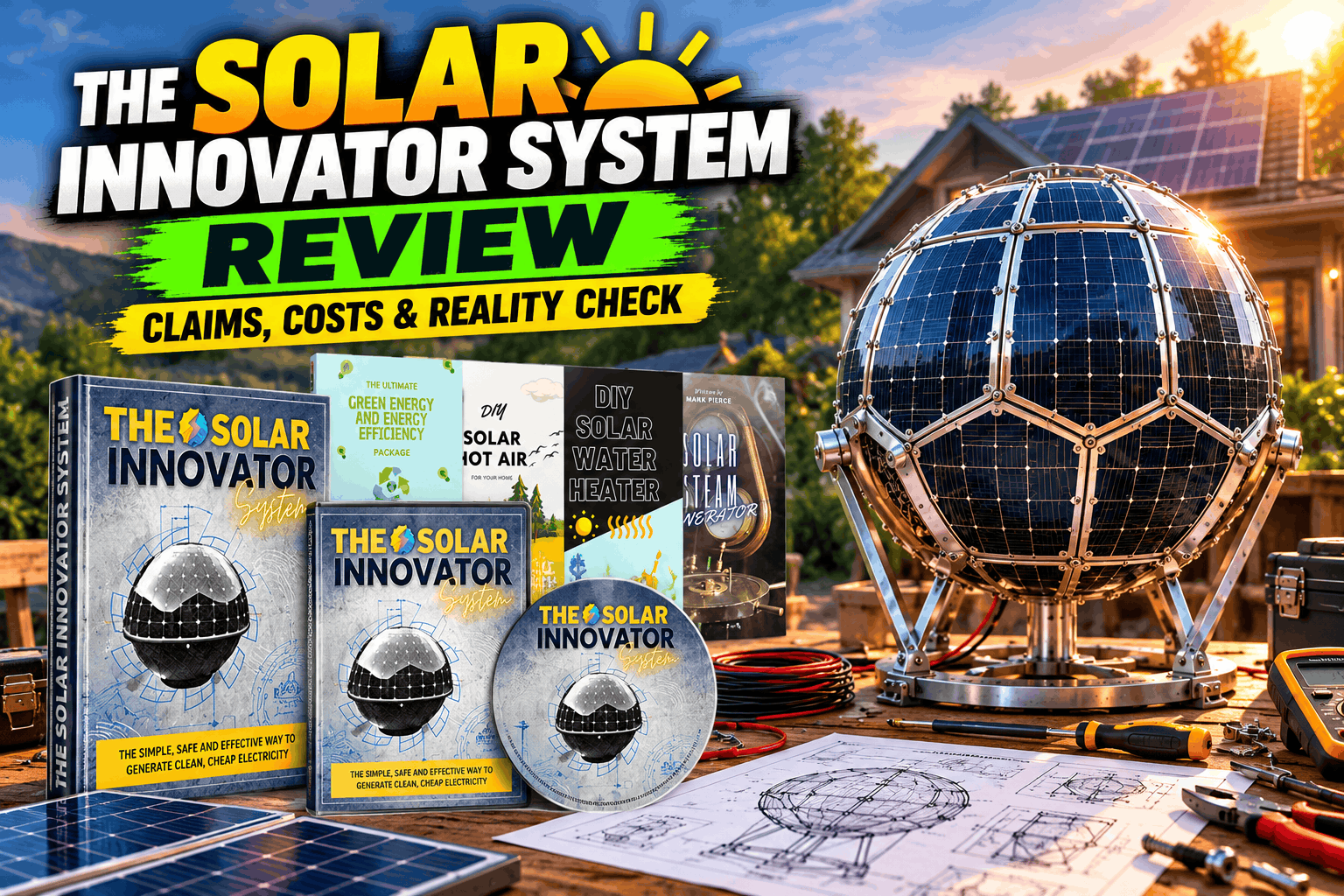
The supplied product image displays a bundle of additional energy-related digital materials alongside The Solar Innovator System. Visible titles include the following:
- The Ultimate Green Energy and Energy Efficiency Package: Presented as additional material about green energy and efficiency.
- DIY Solar Water Heater: A guide advertised around solar water-heating concepts.
- DIY Solar Hot Air: The cover appears to reference a solar hot-air project; the complete title and contents should be confirmed in the current offer.
- Solar Steam Generator: An additional energy-related title shown in the product bundle.
The image also displays a $149 value badge. That is a promotional value claim and should not be interpreted as an independently verified market valuation.
We have not independently reviewed these additional guides. Their presence may broaden the advertised educational package, but it does not establish the accuracy, safety, or performance of the methods they describe. Confirm the exact bonus list before purchasing.
Price and Money-Back Guarantee
The product workbook lists The Solar Innovator System at $39. The sales page advertises a 60-day money-back guarantee and describes the purchase as a digital product with email support.
The guide’s price is separate from the materials needed to build the device. The seller advertises a construction budget below $200, but the actual total may vary depending on the design, parts, tools, and installation requirements. Consider the combined cost before deciding whether the project is worthwhile.
Before ordering, verify the final checkout price, the files included, the support terms, and the refund process. Keep your order confirmation and a copy of the terms displayed at checkout. We have not independently tested the refund process or confirmed the availability of lifetime support.
Who Might Consider The Solar Innovator System?
The Solar Innovator System may interest people who enjoy DIY projects and want to explore the general idea of three-dimensional solar collection. A structured guide may be useful as a starting point for studying solar-cell arrangements, construction methods, and small-scale photovoltaic experiments.
It is less suitable for buyers expecting guaranteed reductions in household electricity costs, a proven replacement for conventional solar panels, or a dependable emergency power supply. If reliable power is the goal, prioritize tested equipment with documented output, appropriate safety protections, and a clear warranty.
What to Check Before Buying
- Confirm that the offer is for digital materials rather than a physical solar device.
- Check the final price and the current 60-day refund terms.
- Verify which videos, blueprints, materials lists, and bonus guides are included.
- Ask whether independent performance measurements exist for the exact design.
- Look for measured output in watts and energy generation over time, not just promotional percentages.
- Budget for the physical parts, tools, mounting, wiring, and any professional assistance.
- Use safe electrical practices and consult a qualified electrician before integrating experimental equipment into household circuits.
Review the Current Solar Innovator System Offer
Check the current price, included digital guides, support terms, and refund policy before deciding whether the package suits your needs.
Affiliate Disclosure: This article contains an affiliate link. If you purchase through it, we may earn a commission at no additional cost to you. This does not change our goal of evaluating the product’s advertised claims and limitations fairly.
Final Verdict: Is The Solar Innovator System Worth Considering?
The Solar Innovator System is a digital DIY solar guide advertised with videos, blueprints, illustrated instructions, and a materials list. Its spherical solar concept is related to a real area of photovoltaic research, which makes the topic interesting from an educational and engineering perspective.
However, the existence of research into three-dimensional solar designs does not prove that this specific DIY guide can deliver the advertised output or cut household electricity bills by 50% to 80%. The claims about powering major appliances and providing extensive energy independence need independent, repeatable testing before they can be relied on.
Our conclusion: Consider The Solar Innovator System only if you want to investigate a DIY solar concept and understand that you may need to spend additional money on parts and tools. Do not purchase it on the assumption that it will eliminate your electricity bill or replace a professionally designed solar installation. Verify the offer terms, check the evidence, and prioritize safety before attempting any electrical project.
Frequently Asked Questions
Is The Solar Innovator System a physical solar panel?
No. It is marketed as a digital information package containing instructions and related materials. Buyers need to source the physical components separately and build the device themselves.
How much does The Solar Innovator System cost?
The product workbook lists the price at $39. The physical construction materials are an additional expense, and the seller’s estimated build costs should be treated as approximate rather than guaranteed.
Does The Solar Innovator System come with a money-back guarantee?
The seller advertises a 60-day money-back guarantee. Review the current checkout terms and refund instructions before ordering, because this review has not independently tested the refund process.
Can The Solar Innovator System power an entire home?
That claim has not been independently verified for this specific DIY build. Whole-home power depends on measured output, sunlight, system design, electrical equipment, storage needs, and household consumption. Do not rely on the advertised claims without credible performance evidence.
About the Author