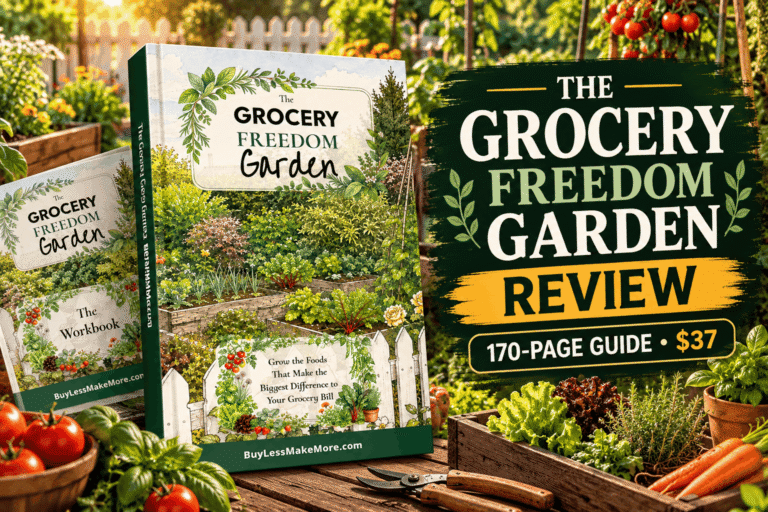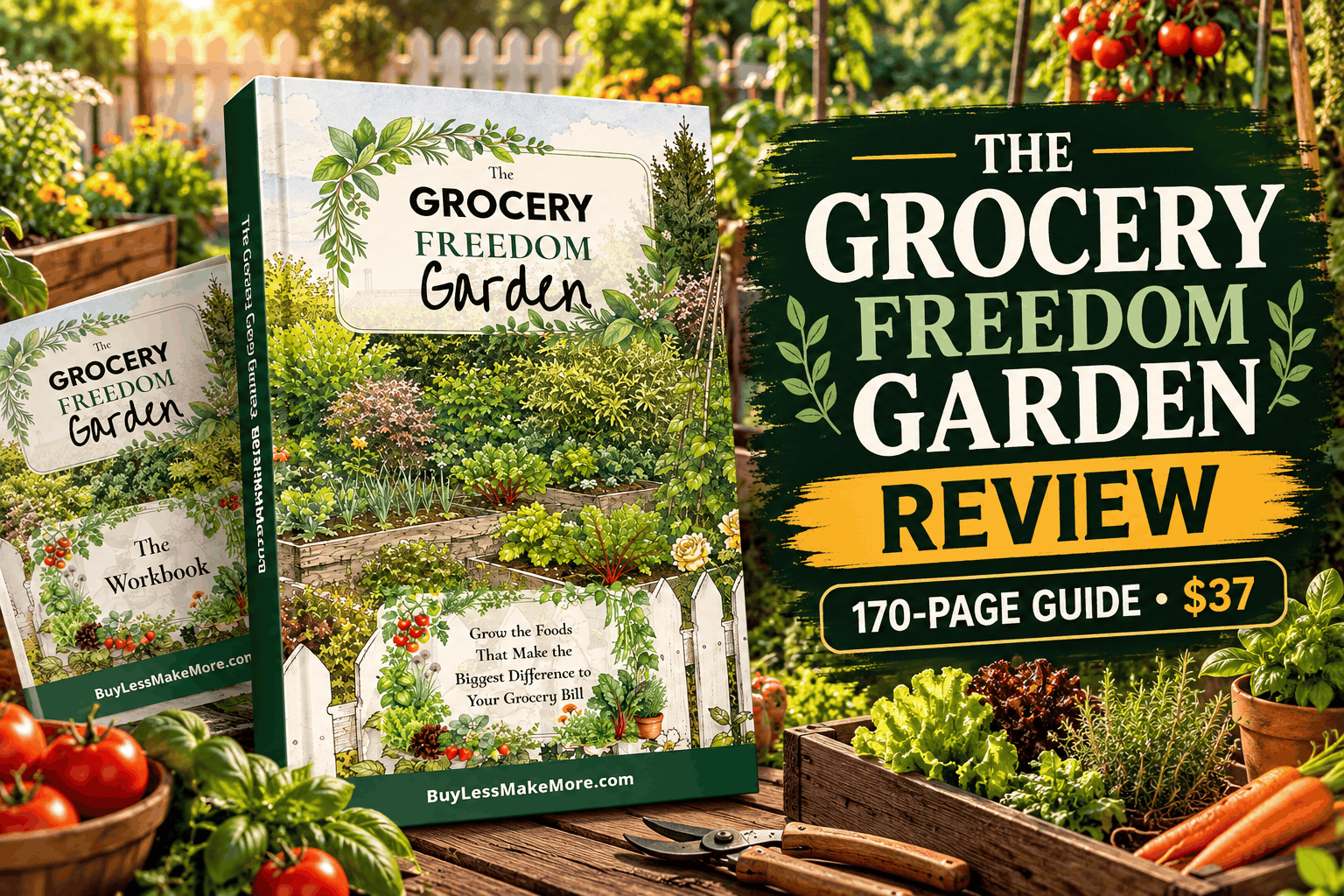
The Grocery Freedom Garden Review — a guide to choosing useful crops and planning a food garden around household grocery purchases.
The Grocery Freedom Garden is a digital gardening guide designed to help households decide which foods are worth growing, where those crops can fit, and how homegrown produce might replace some regular grocery purchases. Rather than encouraging readers to grow everything, the guide starts with the foods they already buy and works backward to a practical garden plan.
According to the supplied product information, the package includes a 170-page digital guide and a 13-page printable workbook. The listed price is $37 as a one-time payment, with no subscription. The seller also advertises an unconditional 60-day refund policy processed by DigiStore24.
This approach may appeal to people who have limited outdoor space, established ornamental gardens, or no previous gardening experience. However, growing food takes time, supplies, and ongoing care, and savings will vary by household. This review examines the advertised contents, potential strengths, limitations, and what to consider before purchasing.
Research-Based Review:, Based on published product information and research, we have not independently tested this product.
Quick Review
| Product | The Grocery Freedom Garden |
|---|---|
| Product type | Digital gardening guide and printable workbook |
| Listed price | $37 one-time payment |
| Guide length | 170 pages |
| Workbook | 13-page printable PDF |
| Main purpose | Plan a useful food garden around regular grocery purchases, available space, and household needs |
| Intended audience | Beginners, small-space gardeners, and households interested in growing food they regularly use |
| Refund policy | Advertised unconditional 60-day refund policy |
| Independent testing | Not performed for this review |
What Is The Grocery Freedom Garden?
The Grocery Freedom Garden is presented as a practical guide to growing food with a household’s shopping habits in mind. Instead of beginning with a list of popular vegetables, the method asks readers to examine what they regularly purchase, identify promising crops, and find suitable places to grow them.
The central idea is that a home garden does not have to replace the supermarket or produce every food a household needs. It can focus on a few useful crops that replace purchases made repeatedly throughout the year.
For example, a household that frequently buys fresh herbs or salad leaves might investigate whether growing some of those items at home is practical. Another household may have more reason to consider beans, berries, or other produce it uses regularly. The best choices depend on local growing conditions, available space, and actual food habits.
This makes The Grocery Freedom Garden more of a planning and decision-making resource than a complete encyclopedia of vegetable-growing instructions. That distinction matters when deciding whether it matches your needs.
How the Grocery Freedom Method Works
The product description outlines a process that connects grocery spending, growing space, crop selection, and harvest use. Its main steps include the following.
What Is Included in The Grocery Freedom Garden?
According to the supplied product page, the digital package contains a 170-page guide organized into 16 sections and a separate 13-page printable workbook.
Advertised Guide Topics
- Your Grocery Audit: Examine frequent fresh-food purchases and recurring costs.
- What Is Worth Growing: Compare crops using grocery value, productivity, practicality, and repeat value.
- Space You May Have Missed: Consider beds, fences, paving, pots, and gaps among ornamental plants.
- A Garden Plan That Fits: Match promising crops with suitable growing areas.
- Food Through the Seasons: Think about growing windows and succession planting.
- Repeated Harvests: Explore ways to make limited space provide food more than once.
- Herbs, Fruit, and Perennial Food: Consider longer-term choices and crops close to the kitchen.
- Using the Harvest: Build habits that help garden produce reach meals and avoid waste.
- Your First 90 Days: Begin with manageable actions and review what works.
The sales material lists 16 sections in total; the topics above summarize the sections explicitly described in the supplied product information.
The 13-Page Printable Workbook
The workbook is designed to turn the guide’s ideas into practical planning and tracking tools. The product page names six tools:
- Grocery Audit Worksheet: Identify regular purchases that may deserve attention first.
- Is It Worth Growing? Scorecard: Compare potential crops using a score out of 20.
- Grocery Freedom Garden Planner: Map potential growing areas and initial actions.
- Succession Planting Planner: Plan what to grow next as seasons or harvests change.
- “Didn’t Buy It” Tracker: Record purchases that homegrown food may replace.
- 90-Day Review: Reflect on what worked and what should change.
The workbook may be useful for readers who prefer writing down decisions rather than keeping their plans in their heads. It is supplied as a printable PDF, but the product information says printing is optional; the main guide can be read on a screen.
Is The Grocery Freedom Garden Suitable for Beginners?
The sales page includes an “Absolute Beginner’s Quick Start” that covers basic plant care, light, soil and potting mix, container drainage, planting depth, spacing, watering, feeding, seeds, and common early problems.
That makes the product relevant to people who are new to gardening and want to start with a manageable plan. The guide’s planning approach may also help beginners avoid buying containers, tools, or seeds before deciding what they actually want to grow.
However, the product page explicitly says this is not a manual for growing every vegetable. For crop-specific instructions, readers are expected to use plant labels, seed packets, and reliable local gardening resources. Buyers seeking detailed instructions for every crop should take that limitation into account.
Pros of The Grocery Freedom Garden
What We Like About the Approach
- Starts with real household needs: The method begins with food you already buy instead of encouraging you to grow crops without a clear purpose.
- Designed for ordinary spaces: It considers balconies, containers, fences, paving, existing beds, and small yards.
- Includes a planning workbook: The scorecard, garden planner, and tracking sheets provide a way to put ideas on paper.
- Considers seasonal planning: Succession planting and repeated harvests are included in the advertised scope.
- Includes a beginner starting point: The product page describes a quick-start section for people unfamiliar with basic gardening.
- Emphasizes practical use: The method considers whether a harvest will be eaten and replace a grocery purchase.
- No subscription advertised: The listed price is a one-time payment for the digital package.
These are strengths of the advertised structure, not verified results. We have not independently examined every page or tested the workbook in a real garden.
Cons and Limitations to Consider
What to Keep in Mind
- No guaranteed savings: Results depend on what you grow, how much you use, local conditions, and the costs of supplies.
- Not a complete crop encyclopedia: The product page says crop-specific growing instructions must come from other sources.
- Gardening requires ongoing work: Planting, watering, harvesting, and dealing with pests or failed crops still take time.
- Setup costs can add up: Pots, seeds, soil, tools, and other supplies may reduce or delay any financial benefit.
- Local conditions matter: One planting calendar cannot apply to every climate; the seller recommends using reliable local guidance for exact timing.
- Independent quality not verified: We have not independently tested the guide or confirmed the effectiveness of its planning method.
Can It Really Help Reduce Your Grocery Bill?
The Grocery Freedom Garden is built around the idea of replacing selected grocery purchases with food grown at home. That is a more measured goal than promising complete food self-sufficiency, but it still does not guarantee a financial return.
For example, growing herbs that your household uses frequently may be more practical than investing heavily in a crop you rarely eat. A productive plant can provide value when its harvest is used regularly, but seeds, containers, growing medium, water, time, and failed attempts all affect the overall calculation.
A Simple Way to Evaluate Your Results
- Write down the fresh foods you buy repeatedly.
- Choose a small number of crops that suit your available space and growing conditions.
- Record the cost of seeds, plants, containers, soil, and other supplies.
- Track the produce you actually harvest and use.
- Estimate the value of grocery purchases replaced, then compare it with your costs.
This is a practical way to assess your own results, not a promise that the garden will save a particular amount.
The workbook’s advertised “Didn’t Buy It” Tracker is intended to help make those substitutions visible. The value of that approach is that it encourages readers to track what happens instead of assuming every harvest creates a saving.
Does It Work Outside New Zealand and Australia?
The product page says the guide uses seasonal thinking rather than relying on one fixed planting calendar and includes a season translator for readers in the northern and southern hemispheres.
That may make the planning approach relevant to a broader audience, but local climate still matters. Planting windows, temperatures, rainfall, pests, and suitable varieties differ by location. The product page advises readers to consult reliable local sources for exact planting dates.
If you live in a region with very different growing conditions, treat the guide as a planning framework and verify crop-specific advice locally before investing in seeds or equipment.
Price, Digital Delivery, and Refund Policy
Offer Details
Listed price: $37, one-time payment, with no subscription advertised.
What is included: A 170-page digital guide and a 13-page printable workbook.
Delivery: The sales page says the PDF files become available after purchase.
Refund: The seller advertises an unconditional 60-day refund policy, with refunds processed by DigiStore24.
Before ordering, review the current checkout details and keep your purchase confirmation. We have not independently tested the download process or requested a refund, so the policy description above reflects the supplied sales information.
Who Should Consider The Grocery Freedom Garden?
The product may be a reasonable fit if you want to:
- Grow foods your household already buys regularly.
- Make use of a balcony, courtyard, containers, fence, or existing ornamental garden.
- Start gardening without immediately redesigning your entire outdoor space.
- Use worksheets to compare crop choices and organize a first 90-day plan.
- Track whether homegrown produce actually replaces grocery purchases.
It may be less suitable if you want complete food self-sufficiency, a large-scale farming manual, detailed growing instructions for every vegetable, or an instant reduction in grocery spending. It is also unlikely to suit someone who does not want the ongoing work that gardening requires.
What to Check Before Buying
- Confirm the current price and the exact digital files included.
- Decide whether you need a planning guide or detailed crop-by-crop instructions.
- Identify the foods your household uses most frequently.
- Consider your available growing space, time, climate, and initial supply costs.
- Read the current refund terms before completing the purchase.
Where to Get The Grocery Freedom Garden
If the guide’s grocery-first approach fits your goals, check the current offer and review the contents before purchasing. Remember that the product provides a planning framework; it cannot guarantee a specific harvest or a particular amount of grocery savings.
Explore The Grocery Freedom Garden
Review the 170-page guide, printable workbook, listed $37 price, and current refund terms before deciding.
Final Verdict: Is The Grocery Freedom Garden Worth $37?
The Grocery Freedom Garden takes a practical approach to home food growing: begin with what you buy, compare potential crops, find useful space, and track the food your garden actually replaces. The advertised 170-page guide and 13-page workbook cover planning, beginner basics, seasonal thinking, and harvest tracking.
Its main limitation is that it is a planning resource rather than a complete manual for growing every crop. It also cannot promise that the value of homegrown produce will exceed the cost of supplies and the time involved. Those factors will vary from one household to another.
Our verdict: The Grocery Freedom Garden may be worth considering for beginners and small-space gardeners who want to make deliberate choices about what to grow and track whether those choices help their household. At the listed price of $37, compare the advertised contents with your needs, check the current refund terms, and keep realistic expectations about possible savings.
Frequently Asked Questions
Does the workbook have to be printed?
No. The product page says the guide can be read on a screen and the workbook is supplied as a separate, printer-friendly PDF. Printing is optional.
Does this package include seeds, pots, or gardening equipment?
The supplied offer describes a digital guide and printable workbook. It does not list physical gardening supplies as included items, so plan to obtain any needed seeds, containers, soil, and tools separately.
Will the guide tell me exactly how much money I will save?
No particular saving is promised. The sales page says results depend on household food habits, what grows successfully, local conditions, and how much produce replaces food you would otherwise buy.
Is it designed for a perfect, traditional vegetable garden?
No. The product description emphasizes ordinary homes and existing spaces, including ornamental beds, containers, paving, fences, and balconies. Its focus is on finding useful growing areas rather than creating a particular garden style.
Does it replace local gardening advice?
No. The product page recommends using reliable local sources for exact planting times. Local advice is also useful for selecting suitable varieties and understanding climate-specific growing conditions.
What happens if the guide is not suitable for me?
The seller advertises an unconditional 60-day refund policy processed by DigiStore24. Read the current purchase terms and follow the seller’s stated process if you decide to request a refund.
About the Author