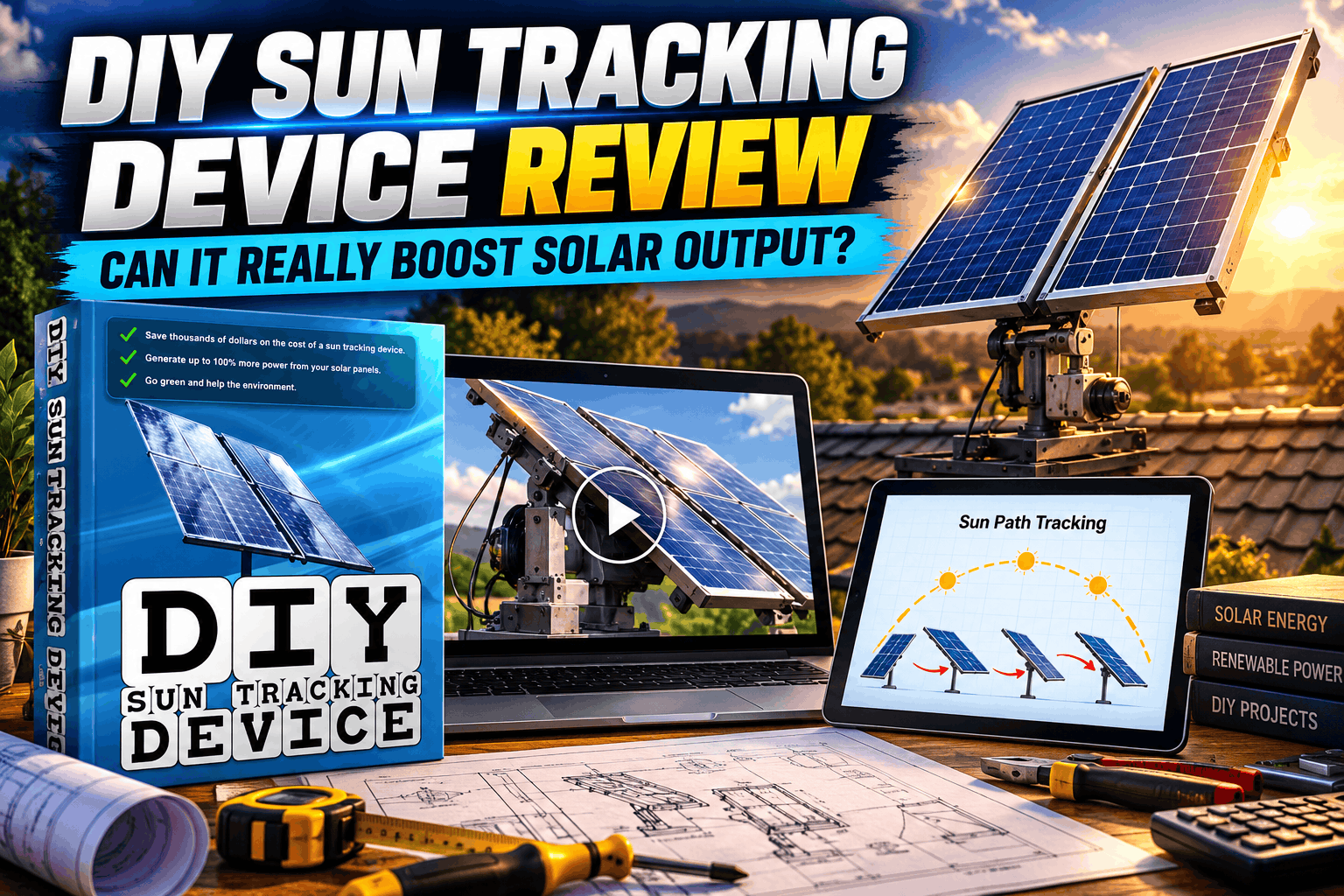
DIY Sun Tracking Device Review: exploring the solar-tracking guide and its claimed power output benefits.
Want to get more out of your solar panels without spending a fortune on expensive tracking equipment? The DIY Sun Tracking Device is marketed as a budget-friendly guide for people interested in improving how their solar panels follow the sun. It promises instructional videos, PDF materials, and practical guidance for exploring a DIY solar-tracking project. But is this guide worth buying, and can it really help improve solar energy production?
In this DIY Sun Tracking Device Review, we examine the advertised contents, pricing, included bonuses, potential advantages, and limitations. We also look at the seller’s claim that a tracking setup could generate up to 100% more power. That is a promotional claim, not a result we have independently verified, so it should not be treated as a guaranteed outcome.
One important point before we begin: the product is presented as a digital guide containing videos and PDF materials, rather than a complete, ready-to-install solar tracking device. You may need to source components and account for additional construction costs if you decide to follow the project.
Research-Based Review:, Based on published product information and research, we have not independently tested this product.
Quick Review: DIY Sun Tracking Device
| Product Name | DIY Sun Tracking Device |
| Product Type | Digital DIY solar-tracking guide |
| Advertised Format | Video tutorials and PDF guide |
| Advertised Price | $27; confirm the current checkout price |
| Advertised Guarantee | 60-day money-back guarantee |
| Included Bonuses | Broken solar panel glass replacement, deep-cycle batteries, and roof installation topics |
| Our Assessment | Evaluate the instructions, build cost, and realistic energy gains before buying |
What Is the DIY Sun Tracking Device?
The DIY Sun Tracking Device is marketed as an instructional package for people who want to learn about solar tracking and explore building their own tracking setup. A solar tracker is a mechanism designed to change the position of solar panels as the sun moves across the sky.
Unlike a conventional fixed solar installation, a tracking system attempts to keep panels oriented more directly toward the sun during parts of the day. Whether that approach is worthwhile depends on the design, installation location, weather, energy needs, equipment costs, and the additional power generated.
The product’s sales page promotes video and PDF materials intended to guide buyers through the subject. It also advertises potential savings compared with purchasing a commercial tracking device. However, the available product information does not independently establish the quality of the plans or the results a buyer will achieve.
What Do You Get With DIY Sun Tracking Device?
1. Video Tutorials
The seller advertises video-based instruction to help buyers understand the project. Videos may make technical concepts easier to follow, especially for people who prefer visual explanations. However, the actual usefulness depends on the clarity, accuracy, and completeness of the material provided.
2. PDF Guide and Project Information
The package is advertised as including PDF resources. These may provide written references to consult while studying the project. Before purchasing, consider whether the available description provides enough information about the technical specifications, component requirements, and level of experience needed.
3. Bonus: How to Change the Glass Sheet on a Broken Solar Panel
The sales page lists a bonus covering the replacement of glass on a broken solar panel. This topic may interest solar equipment owners, but damaged solar panels can involve electrical and structural hazards. Do not assume that replacing panel glass is a simple or safe repair for an untrained person.
4. Bonus: Deep-Cycle Batteries
Another advertised bonus covers deep-cycle batteries. This subject may be relevant to people researching energy storage for solar applications. Battery selection, charging, ventilation, compatibility, and safety all matter when planning an energy system.
5. Bonus: Installing a Solar Panel Array on a Roof
The offer also lists guidance about installing a solar panel array on a roof. Roof installations require careful attention to structural support, waterproofing, wind loads, electrical regulations, and safe working practices. A digital guide should not replace qualified professional assistance when the work requires it.
How Does a Sun Tracking Device Work?
A solar tracking mechanism changes the orientation of a panel to follow the sun’s apparent movement. Depending on the design, a tracker may move along one axis or two axes. The purpose is to improve the angle at which sunlight reaches the panel during some operating hours.
Tracking does not create additional energy by itself. It changes panel orientation, and the resulting benefit depends on how much additional sunlight the system captures compared with a fixed installation. Motors, controls, structural parts, maintenance, shading, and local weather can all affect the overall result.
The DIY Sun Tracking Device is marketed as a way to explore this approach through a budget-conscious project. However, the supplied product information does not provide independently verified measurements showing the performance of a completed system built from the guide.
Can DIY Sun Tracking Device Really Generate 100% More Power?
The seller advertises the possibility of generating up to 100% more power from solar panels. This is an important claim to examine carefully because the actual improvement from solar tracking varies considerably by installation and operating conditions.
A tracker may improve energy capture compared with a fixed panel in some situations, but the result depends on location, season, weather, panel orientation, tracker design, and operating efficiency. The additional equipment also introduces costs and possible maintenance requirements.
We have not independently tested this product, and the available information does not establish that following its guide will double the power output of a particular solar installation. Treat the advertised percentage as a seller claim, not a guaranteed result.
Before investing in a tracking project, compare expected energy gains against the total construction cost and the performance of a properly positioned fixed-panel system.
DIY Sun Tracking Device Pros
- Video and PDF format: The seller advertises multiple instructional formats for learning about the project.
- Solar-focused subject matter: The guide may interest people researching solar tracking and DIY renewable-energy projects.
- Additional learning bonuses: The offer lists materials about solar panel glass, deep-cycle batteries, and roof installation.
- Potential DIY appeal: The project may suit technically minded readers who enjoy researching and assembling equipment.
- Advertised refund policy: The seller states that a 60-day money-back guarantee is available, subject to the applicable terms.
These potential advantages describe the advertised package and its subject matter. They do not prove that the instructions are effective or that a completed tracker will achieve a specific increase in solar output.
DIY Sun Tracking Device Cons and Limitations
- Unverified performance claim: The advertised increase of up to 100% has not been independently confirmed.
- Additional build expenses: Motors, controls, structural parts, wiring, tools, and mounting hardware may cost extra.
- Technical skills may be needed: Assembly and electrical work can require practical experience and careful planning.
- Maintenance requirements: A moving tracker may need more maintenance than a fixed mounting system.
- Roof installation risks: Working at height and modifying a roof can involve safety and structural concerns.
- Guide quality is not independently established: The available product copy does not verify the completeness or accuracy of every instruction.
How Much Does DIY Sun Tracking Device Cost?
The product information lists the advertised purchase price as $27, reduced from a displayed price of $49.97. Promotional prices can change, so check the current checkout page before ordering.
Remember that the price of the guide is different from the cost of building a working solar tracker. Depending on the design, you may need to budget for motors, sensors or controls, mounting hardware, wiring, tools, weather-resistant components, and installation.
To decide whether the project makes financial sense, calculate the full build cost and compare it with a realistic estimate of additional electricity production. Include maintenance and any professional installation expenses in the calculation. Without reliable performance data, a dependable payback period cannot be established.
Is DIY Sun Tracking Device Safe to Build?
Important safety notice: Solar panels, electrical wiring, moving mechanisms, batteries, and roof installations can present electrical, mechanical, fire, and fall hazards.
- Follow the solar panel and electrical component manufacturers’ instructions.
- Use properly rated wiring, controls, mounting hardware, and weather-resistant enclosures.
- Make sure moving parts are secured against wind loads and mechanical failure.
- Use appropriate fall protection and qualified help for roof work.
- Follow local electrical codes, building requirements, and permit rules.
- Consult a qualified solar installer or electrician when the project exceeds your experience.
A guide can provide information, but it cannot eliminate the risks of incorrectly designed or installed equipment. Prioritize safe installation and compliance with local requirements before attempting a DIY solar tracking project.
Who Should Consider DIY Sun Tracking Device?
The guide may be worth investigating for people who already have an interest in solar energy, enjoy DIY projects, and are prepared to research the technical details before purchasing components. It may also interest readers who want to learn more about tracking mechanisms and compare different solar mounting approaches.
It may be a poor fit for someone expecting a complete tracker to arrive ready for installation, guaranteed increases in power output, or a project requiring no technical skills. If your primary goal is to maximize solar savings, compare the expected benefits of tracking against a well-positioned fixed installation and obtain professional advice where appropriate.
What Should You Check Before Buying?
- Confirm which video tutorials, PDF files, and bonuses are included.
- Verify the current price and whether optional upgrades are offered.
- Read the complete refund terms and keep your order confirmation.
- Look for specific technical details about the proposed tracker and its components.
- Estimate the full cost of construction, installation, maintenance, and safety equipment.
- Compare expected energy gains with a fixed-panel setup for your location.
- Check local requirements before installing equipment on a roof or connecting electrical components.
Explore the DIY Sun Tracking Device Guide
Review the current package, included bonuses, checkout price, and refund terms before deciding whether this solar DIY guide suits your needs.
Affiliate Disclosure: This article contains an affiliate link. If you purchase through it, we may earn a commission at no additional cost to you. This does not change our goal of presenting the product’s advertised benefits, limitations, and unverified claims fairly.
Final Verdict: Is DIY Sun Tracking Device Worth It?
Our DIY Sun Tracking Device Review finds that the product is marketed as a digital guide for people interested in solar tracking. The advertised package includes video tutorials, PDF resources, and bonuses covering solar panel glass, deep-cycle batteries, and roof installation.
The main question is whether the instructions can help a buyer build a safe, practical, and financially worthwhile tracker. The seller’s claim of generating up to 100% more power has not been independently verified, and the available product information does not establish the total construction cost or expected payback period.
Our recommendation: Consider the guide only after reviewing the package details, checking the current price, researching the technical claims, and estimating the complete project cost. Compare the potential benefits of a tracking system with a well-positioned fixed solar installation, and prioritize safety when dealing with electrical components or roof work.
If you expect guaranteed power increases or a complete ready-to-use device, the available information does not establish that this product will meet those expectations. Make your decision based on technical evidence and realistic costs rather than the headline savings claim alone.
Frequently Asked Questions
Does the DIY Sun Tracking Device package include a physical tracker?
The offer is presented as a digital video and PDF guide. Confirm the checkout details before purchasing, and do not assume that motors, mounting hardware, or a completed tracking device are included.
What bonuses are advertised with the guide?
The sales page lists bonuses about changing glass on a broken solar panel, deep-cycle batteries, and installing a solar panel array on a roof. Confirm the current package contents before ordering.
Can I install a solar tracking system on my roof?
That depends on the roof structure, mounting design, wind loads, electrical setup, and local requirements. Roof installation can be hazardous, so consult a qualified professional when necessary.
How can I tell whether a solar tracker is worth the cost?
Compare the complete equipment and installation costs with realistic estimates of additional energy production, maintenance, and expected savings. Use reliable performance data rather than assuming the advertised increase will apply to your installation.
About the Author