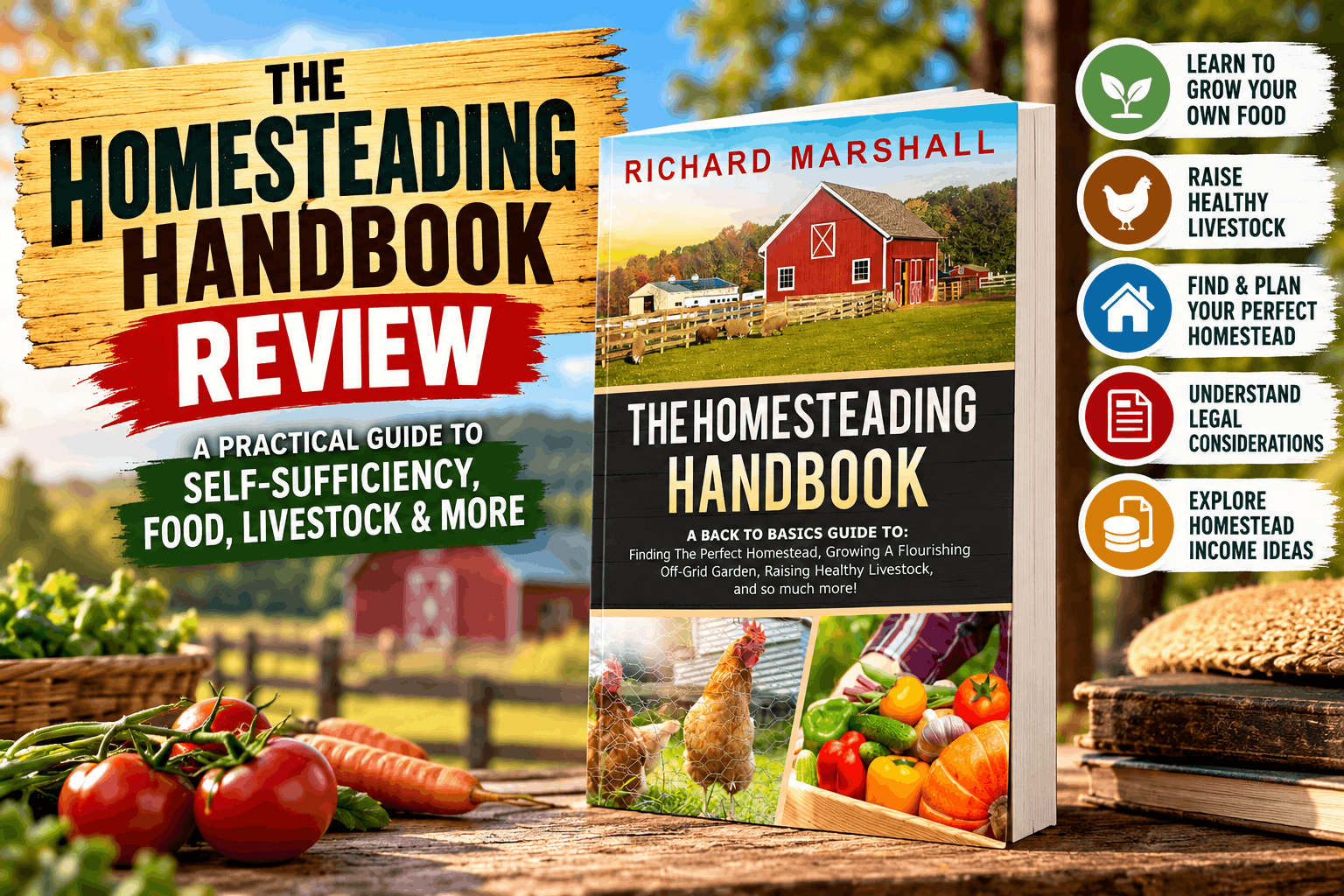
The Homesteading Handbook by Richard Marshall, a back-to-basics guide to homesteading and self-sufficiency.
The Homesteading Handbook is a back-to-basics guide by Richard Marshall that focuses on building a more self-sufficient lifestyle through homesteading, food growing, livestock, property planning, and other practical considerations. The book is aimed largely at people who are interested in starting a homestead or becoming more self-reliant but may not know where to begin. In this review, we look at what the book covers, where it may be useful for beginners, its limitations, and whether its broad approach makes sense for someone building a preparedness or self-sufficiency library.
Research-Based Review:, Based on published product information, third-party book listings, and available reader feedback, we have not independently tested this book or its recommendations.
Quick Review
| Product | The Homesteading Handbook |
| Author | Richard Marshall |
| Main Focus | Homesteading, self-sufficiency, food growing, livestock and sustainable living |
| Topics Covered | Choosing a homestead, growing food, livestock, legal considerations, building a homestead and turning it into a business |
| Intended Audience | Beginners and readers interested in homesteading or greater self-sufficiency |
| Format | Book / guide |
| Current Checkout Offer | 1 copy: Free + $3.95 2 copies: Free + $8.95 3 copies: Free + $9.95 (Most Popular) |
| Money-Back Guarantee | 60 Days 100% Money Back Guarantee |
What Is The Homesteading Handbook?
The Homesteading Handbook is presented as a practical introduction to homesteading and self-sufficient living. Rather than concentrating on one narrow skill, it takes a broader look at the different areas a person may need to consider when developing a homestead.
The material covers subjects ranging from finding suitable property and growing food to raising livestock, understanding legal considerations, developing the property, and potentially turning a homestead into a source of income.
That broad approach is one of the book’s main strengths for beginners. Someone who is still trying to understand what homesteading actually involves can use a wide-ranging guide like this to identify the subjects they need to research further.
What Can You Learn From The Homesteading Handbook?
Finding the Right Homestead
Choosing the right property is one of the biggest decisions involved in homesteading. The book discusses finding a suitable homestead and the types of considerations that can affect whether a property is practical for a self-sufficient lifestyle.
This part can be especially useful for beginners because purchasing rural property involves more than simply finding land that looks attractive. Access to water, food production possibilities, utilities, location, local rules, property characteristics, and long-term plans all matter.
Growing Your Own Food
Food production is another major theme. The book discusses growing food and approaches to developing a productive garden, including methods intended to help readers make better use of available space.
For preparedness-minded readers, this is an important subject because a productive garden can complement stored food supplies. However, readers should treat the book as an introduction rather than assuming a general guide can replace detailed information about their own climate, soil, crops, pests, and growing conditions.
Raising Livestock
Livestock is another part of the book’s homesteading approach. The material discusses raising animals as part of a more self-sufficient lifestyle and also addresses livestock-related considerations.
This can help beginners understand that livestock is a significant commitment rather than simply another feature to add to a property. Animals require appropriate housing, food, water, daily care, veterinary attention, and compliance with applicable local requirements.
Building and Developing a Homestead
The book also looks at developing the homestead itself. This includes the broader process of turning a property into a functioning place for growing food, raising animals, improving self-sufficiency, and supporting the lifestyle the owner wants to create.
The official material also discusses topics such as renewable energy and water considerations, along with different approaches to making a homestead more self-sufficient.
The Book Also Covers Legal and Financial Considerations
Homesteading is not only about gardening and livestock. Property rules, permits, zoning, water rights, animal regulations, building requirements, and other laws can significantly affect what you can do with a particular property.
The book includes legal considerations and also discusses the possibility of turning a homestead into a business. That makes the guide broader than a simple gardening or rural-living book.
Important: Homesteading laws and property requirements vary significantly by location. Information in a general guide should not be treated as legal advice. Always verify zoning, permits, livestock rules, water regulations, building requirements, and other applicable laws with the appropriate local authorities before making property or construction decisions.
Is The Homesteading Handbook Useful for Beginners?
This is where the book makes the most sense. A beginner can easily become overwhelmed by the number of subjects involved in homesteading. Gardening, livestock, property selection, construction, utilities, legal requirements, food storage, and finances can each become their own area of study.
The Homesteading Handbook takes a broader introductory approach, which can help readers understand how these subjects fit together.
Third-party reader feedback also suggests that the book is better viewed as a high-level introduction than as an extremely detailed technical manual. Some Goodreads reviewers described it as a brief or high-level overview, while also noting that its checklists and bullet-style information can still be useful.
That distinction is important. If you are completely new to homesteading, the broad coverage can be valuable. If you already have significant experience with farming, livestock, construction, gardening, or rural property management, you may want more specialized resources for deeper technical instruction.
Where The Homesteading Handbook May Fall Short
The biggest limitation is depth. Because the book covers many different areas of homesteading, it cannot provide the same level of detail as a dedicated guide on each individual subject.
For example, a reader who wants detailed livestock management, advanced gardening techniques, construction plans, electrical systems, water systems, or legal guidance will likely need additional resources focused specifically on those topics.
There are also inconsistent page-count figures across online listings for this title, so we are not treating a specific page count as definitive here.
What We Like
- Broad introduction to the major areas of homesteading.
- Covers property selection rather than focusing only on gardening.
- Includes food growing and livestock topics.
- Addresses legal and financial considerations that beginners can overlook.
- Useful as a starting point for identifying subjects that deserve deeper research.
- Relevant to readers interested in self-sufficiency and preparedness.
What to Keep in Mind
- The broad coverage means individual subjects are not covered with unlimited technical depth.
- Beginners may need additional resources for specialized skills.
- Property and homesteading laws vary by location.
- Book listings online contain inconsistent page-count information.
- Online offers, pricing, and included extras can change over time.
Who Should Read The Homesteading Handbook?
The book is most relevant to people who are at the beginning of their homesteading journey or are considering a more self-sufficient lifestyle.
It may be particularly useful if you are researching what is involved before purchasing land, planning a garden, considering livestock, or simply trying to understand the different pieces that make up a functioning homestead.
It may be less useful as a standalone resource for experienced homesteaders who already have extensive practical knowledge and are looking for highly specialized or advanced instruction.
What About the Included Extras?
The promotional material associated with the offer has also referenced additional homesteading and preparedness-related resources. Because online offers and included bonuses can change, we recommend checking the current checkout page to confirm exactly what is included with your purchase.
What Should Buyers Consider Before Getting It?
| Consideration | Why It Matters |
|---|---|
| Your experience level | The book is better suited to beginners and broad planning than advanced technical study. |
| Your location | Climate, soil, zoning, permits, water access and livestock rules vary by location. |
| Your homesteading goals | Someone focused on gardening may need different follow-up resources than someone planning livestock or off-grid utilities. |
| Need for deeper instruction | Specialized skills will usually require dedicated books, courses, manuals, or local professional guidance. |
| Current checkout offer | The checkout shown for this offer currently presents three copy options with different charges. |
Is The Homesteading Handbook Worth Considering?
If you are new to homesteading and want a broad overview before diving into individual skills, The Homesteading Handbook is worth considering as a starting resource.
Its strongest feature is breadth. Instead of concentrating on just one part of homesteading, it introduces readers to property selection, food production, livestock, legal considerations, homestead development, and the possibility of generating income from a homestead.
The main limitation is the same thing that gives it that breadth: readers should not expect one relatively compact guide to provide all the technical information needed to independently manage every aspect of a homestead.
For a beginner building a homesteading or self-sufficiency library, it can make sense as an introductory resource that helps identify the areas where more detailed research will be needed.
Want to Check the Current Offer?
The checkout currently shows different charges depending on whether you select 1, 2, or 3 copies. Check the current offer and availability before ordering.
Final Verdict
The Homesteading Handbook is best viewed as a beginner-friendly overview of homesteading and self-sufficiency rather than a complete technical manual.
It covers many of the subjects a new homesteader should think about, including choosing property, growing food, raising livestock, understanding legal considerations, developing a homestead, and potentially creating income from it. That makes it useful for someone who wants to understand the bigger picture before specializing in individual skills.
However, readers should expect to supplement it with more detailed resources and local information, particularly for legal requirements, livestock care, construction, utilities, gardening conditions, and other areas where mistakes can be costly.
Bottom line: If you are starting your homesteading journey and want a broad back-to-basics guide to help organize your research, this book is worth considering. Just treat it as a starting point rather than the only resource you will need.
Frequently Asked Questions
Is The Homesteading Handbook good for beginners?
Yes. Its broad coverage makes it more appropriate for readers who are beginning to explore homesteading and self-sufficiency. Experienced homesteaders may find the material less detailed than specialized resources.
Who wrote The Homesteading Handbook?
The book is attributed to Richard Marshall.
What subjects does The Homesteading Handbook cover?
The book covers topics including finding a homestead, growing food, raising livestock, legal considerations, developing a homestead, and turning a homestead into a business.
Does the book provide detailed legal advice?
No general homesteading book should replace location-specific legal guidance. Laws and requirements vary by state, county, city, and property, so readers should verify applicable rules with the relevant local authorities.
How much does The Homesteading Handbook cost?
The checkout offer reviewed for this article shows the book as free with different charges depending on the quantity selected: 1 copy is Free + $3.95, 2 copies are Free + $8.95, and 3 copies are Free + $9.95. The 3-copy option is marked as the most popular offer. Offers can change, so check the current checkout page before ordering.
Does The Homesteading Handbook replace specialized homesteading books?
No. Because it covers many subjects at a broad level, readers who want detailed instruction on gardening, livestock, construction, water systems, renewable energy, or other specialized areas may benefit from additional dedicated resources.
About the Author