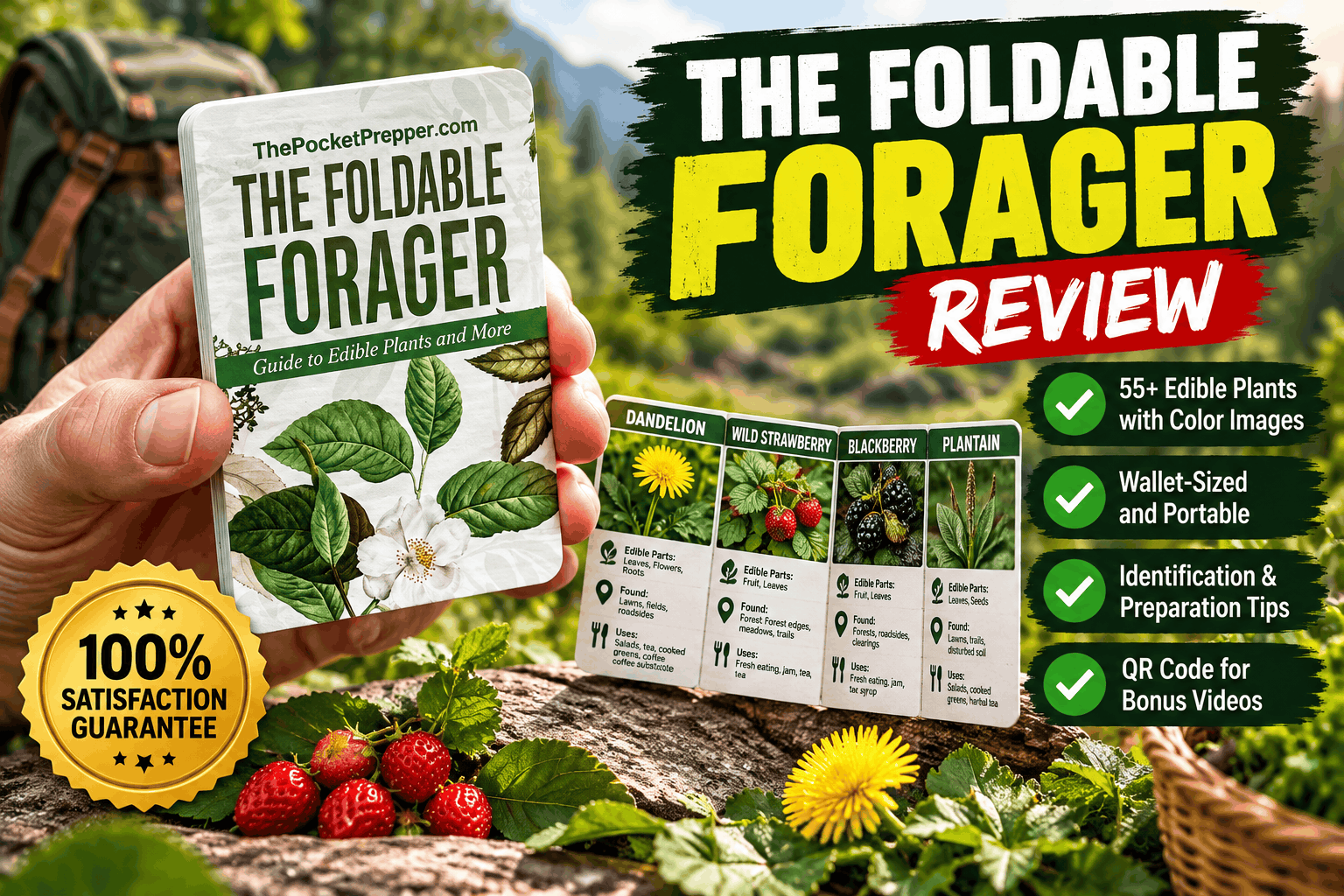
The Foldable Forager — a compact reference guide marketed for learning about wild edible plants.
The Foldable Forager is a compact, foldable reference guide marketed to hikers, campers, outdoor enthusiasts, and people interested in learning about wild edible plants. Unlike a conventional field guide, it is designed to fit in a wallet or small pocket so users can carry it while travelling or spending time outdoors. The seller says it features full-color plant images and information about more than 55 edible plants, trees, nuts, and other wild foods found across North America.
The product page describes information about plant identification, edible parts, habitats, preparation, and potential uses. It also advertises a QR code that leads to additional video content. These features may make The Foldable Forager a convenient starting point for learning about foraging, but a compact reference card has practical limits. Correctly identifying a wild plant can be difficult, especially when poisonous species resemble edible ones.
The product spreadsheet lists a price of $14.99 and a 100% satisfaction guarantee. The sales page also displays promotional pricing and optional offers, so buyers should confirm the final order total and terms before checking out. This review evaluates the advertised features, likely uses, limitations, and safety considerations without presenting the product as independently tested.
Research-Based Review:, Based on published product information and research, we have not independently tested this product.
Quick Review: The Foldable Forager
| Product type | Wallet-sized foldable foraging reference guide |
|---|---|
| Listed price | $14.99 in the product spreadsheet; confirm checkout pricing |
| Plant coverage | Seller advertises information on 55+ North American edible plants and other wild foods |
| Main features | Full-color images, plant information, foldable format, and QR-linked video content |
| Portability | Designed to fit in a wallet, purse, glove box, or small pocket |
| Guarantee | 100% Satisfaction Guarantee listed in the product spreadsheet; check the seller’s current terms |
| Independent testing | Not performed for this review |
| Best suited for | Learning about foraging and carrying a supplementary reference outdoors |
What Is The Foldable Forager?
The Foldable Forager is marketed as a portable guide to wild edible plants. The seller presents it as a way to keep basic foraging information close at hand without carrying a large book in a backpack.
According to the product page, the guide uses full-color images and organizes information about plants and other wild foods. The advertised content covers flowers and herbs, greens, fruits, nuts, mushrooms, seaweed, and additional wild food categories. The seller says individual entries provide information about edible parts, where plants grow, how they may be consumed, and potential uses.
The Foldable Forager is therefore positioned as a compact learning and reference tool rather than a full-length botanical textbook. Its main attraction is convenience: users can carry a small guide during a hike, camping trip, fishing outing, or other outdoor activity.
However, the product’s advertised coverage does not establish that it includes every species a person might encounter. Plant varieties and look-alikes differ by region, season, and growing conditions. Readers should treat the guide as a supplementary resource, not as definitive confirmation that an unfamiliar plant is safe to eat.
What Information Does The Foldable Forager Advertise?
Full-Color Plant Images
The seller says The Foldable Forager contains full-color plant images to help users compare what they see outdoors with the illustrations in the guide. Images can be useful for learning, but a photograph alone may not show every feature needed to distinguish similar species.
Plant Identification Information
The product page advertises information about edible plant parts, habitats, and potential food uses. These details can help readers learn what characteristics to investigate when studying a plant. The actual usefulness of the guide depends on the completeness and accuracy of its entries.
Multiple Foraging Categories
The seller says the guide includes categories such as flowers and herbs, greens, fruits, nuts, mushrooms, seaweed, and other wild foods. This broad approach may interest readers who want an introduction to different types of foraging rather than a guide dedicated to one plant family.
QR-Linked Video Content
The sales page advertises a QR code that links to additional video material. This may offer another way to explore the subject beyond the printed guide. Confirm the availability and scope of any linked content before purchasing if it is an important reason for choosing the product.
Compact Foldable Format
The Foldable Forager is designed to fit in a wallet, purse, glove box, or small pocket. This format may be more convenient than carrying a large field guide on every outing. Its portability, however, also means that the amount of information it can present is limited compared with a comprehensive reference book.
Potential Benefits of The Foldable Forager
What May Appeal to Buyers
- Easy to carry: The foldable design is intended to fit into small everyday-carry spaces.
- Visual reference: Full-color images may help users study plant appearance.
- Broad introductory coverage: The seller advertises several wild-food categories rather than one narrow subject.
- Learning before an outing: The guide may help readers begin studying plants before going into the field.
- Supplementary video content: QR-linked material is advertised as an additional learning resource.
- Outdoor preparedness: A compact reference may complement a wider outdoor skills and preparedness kit.
These benefits relate to the format and advertised content. They do not prove that the guide identifies every plant correctly, replaces practical instruction, or guarantees safe foraging in an emergency.
Limitations to Consider Before Buying
Important Considerations
- Limited space: A wallet-sized guide cannot provide the depth of a comprehensive botanical field guide.
- Regional differences: The advertised coverage focuses on North American wild foods and may not suit people foraging in other regions.
- Look-alike species: Some poisonous plants resemble edible ones, and photographs alone may not resolve every identification.
- Preparation matters: Some plants have edible and inedible parts, and some require specific preparation.
- Claims require verification: The seller’s descriptions of the guide’s usefulness and coverage are promotional statements, not independent performance testing.
- Order offers can vary: Promotional pricing, optional gifts, and membership offers may affect what appears during checkout.
The Foldable Forager may be convenient as a reminder or introductory reference, but experienced foragers often use more detailed regional resources. Buyers should consider whether a small fold-out guide provides enough depth for their intended use.
Foraging Safety: What a Pocket Guide Cannot Guarantee
Safety note: Never eat a wild plant or mushroom based only on a quick visual match, a single photograph, or an unverified identification.
Mississippi State University Extension recommends being certain of a plant’s identity, consulting multiple reliable resources, learning which parts are edible and how they must be prepared, and watching for poisonous look-alikes. Read its wild edible plants safety guidance before relying on any foraging reference.
The Foldable Forager’s sales page mentions a “Universal Edibility Test.” This claim deserves particular caution. A so-called universal test should not be used as a substitute for correctly identifying a plant and knowing that it is edible. Do not experiment by tasting an unknown plant to determine whether it is safe.
Foraging safety also depends on location and conditions. Plants collected near roads, sprayed areas, industrial sites, or contaminated water may be unsafe even when the species itself is edible. Local rules may also restrict gathering plants in parks or protected areas.
For these reasons, The Foldable Forager should be treated as one learning aid among several. It should not be the sole source used to make a decision about eating an unfamiliar wild plant.
Who May Find The Foldable Forager Useful?
The Foldable Forager may appeal to people who enjoy hiking, camping, fishing, nature walks, or learning about wild plants. Its small format could be useful to someone who wants a lightweight reminder of material they have already studied.
It may be worth considering if you:
- Prefer a compact guide over carrying a large book on every outing.
- Want to learn basic foraging terminology and plant categories.
- Plan to study the guide before using it outdoors.
- Are willing to cross-check identifications with trusted regional references.
It may be less suitable for someone who needs an in-depth botanical reference, expects the guide to identify every plant in their local area, or intends to rely on it as the only food-identification resource during an emergency.
Price, Promotional Offers, and Guarantee
The product spreadsheet lists The Foldable Forager at $14.99 and records a 100% Satisfaction Guarantee. The sales page also displays a crossed-out $19.99 price and advertises promotional savings. Because the offer may change and checkout pricing can depend on the selected options, confirm the actual item price and final total before submitting an order.
The sales page also presents an optional gift offer involving a $1 shipping charge and a 14-day trial of a membership called My Survival Alliance. The page states that after the trial, the membership renews at $39.97 per month if the customer chooses to remain enrolled. Read the offer carefully and make sure you understand whether any optional selection adds a recurring charge.
The spreadsheet’s guarantee entry should not be treated as a substitute for the current refund terms. Review the seller’s policy before purchasing and keep your order confirmation in case you need to contact customer support.
What to Check Before Ordering
- Confirm the single-item price and the total shown at checkout.
- Review any optional gifts, trials, or membership selections.
- Read the current satisfaction guarantee and refund policy.
- Check whether the guide’s coverage is relevant to the region where you plan to forage.
- Understand that a compact guide is not a substitute for thorough plant identification.
- Plan to cross-check unfamiliar plants with reliable regional references or a qualified expert.
Explore The Foldable Forager
If you are interested in a portable introduction to wild edible plants, review the current product details and offer terms before deciding. Consider whether the guide’s size, coverage, and level of detail fit your outdoor learning needs.
Check the Current Offer
Review the guide’s advertised contents, current item price, optional offers, and satisfaction terms before ordering.
Final Verdict on The Foldable Forager
The Foldable Forager is marketed as a lightweight, wallet-sized reference for people interested in learning about wild edible plants. Its advertised full-color images, broad subject categories, and QR-linked content may make it convenient for introductory learning and outdoor reference.
Its main limitation is the depth and safety of the information a compact guide can provide. Wild plant identification can be complicated, poisonous look-alikes exist, and preparation requirements vary. The seller’s mention of a universal edibility test should not be treated as a safe alternative to positive identification and trusted guidance.
Our assessment is to consider The Foldable Forager as a supplementary learning tool—not a guarantee that an unfamiliar plant is safe to eat. Confirm the final price, review optional membership terms, and use reliable regional references before making foraging decisions.
Frequently Asked Questions
Can I use this guide outside North America?
The seller describes the guide as covering wild foods found across North America. If you live or travel elsewhere, check whether the species and growing regions in the guide match your location, and use a reliable local reference for identification.
Is a foldable guide easier to carry than a traditional field book?
Its wallet-sized format is designed for portability and takes up less space than many full-size field guides. The trade-off is that a compact format generally cannot provide the same depth of descriptions and reference material as a larger book.
Should I rely on the QR videos to identify an unfamiliar plant?
No. Videos may support learning, but they should not be the final authority for deciding whether a wild plant is safe to eat. Confirm the species and its edible parts with trusted, region-specific resources or a qualified expert.
Can I use the guide as my only emergency food resource?
It is not advisable to rely on a single compact guide as an emergency food plan. Foraging requires knowledge, suitable conditions, and correct identification; maintain appropriate food and water supplies and develop outdoor skills before an emergency occurs.
About the Author