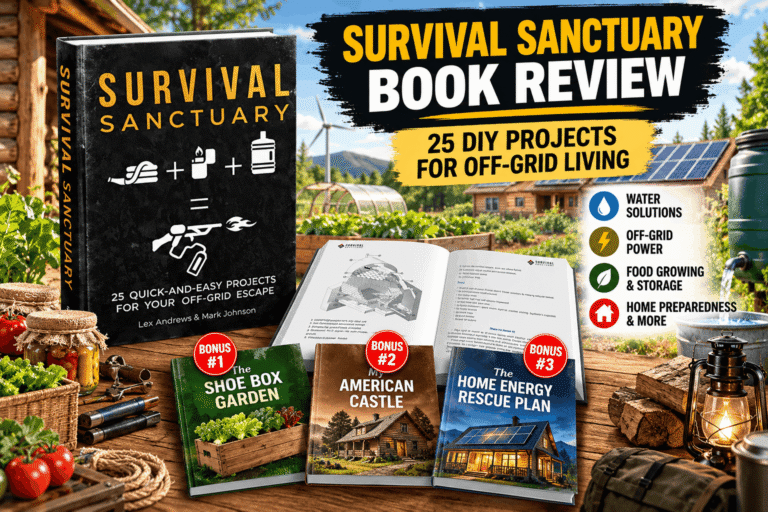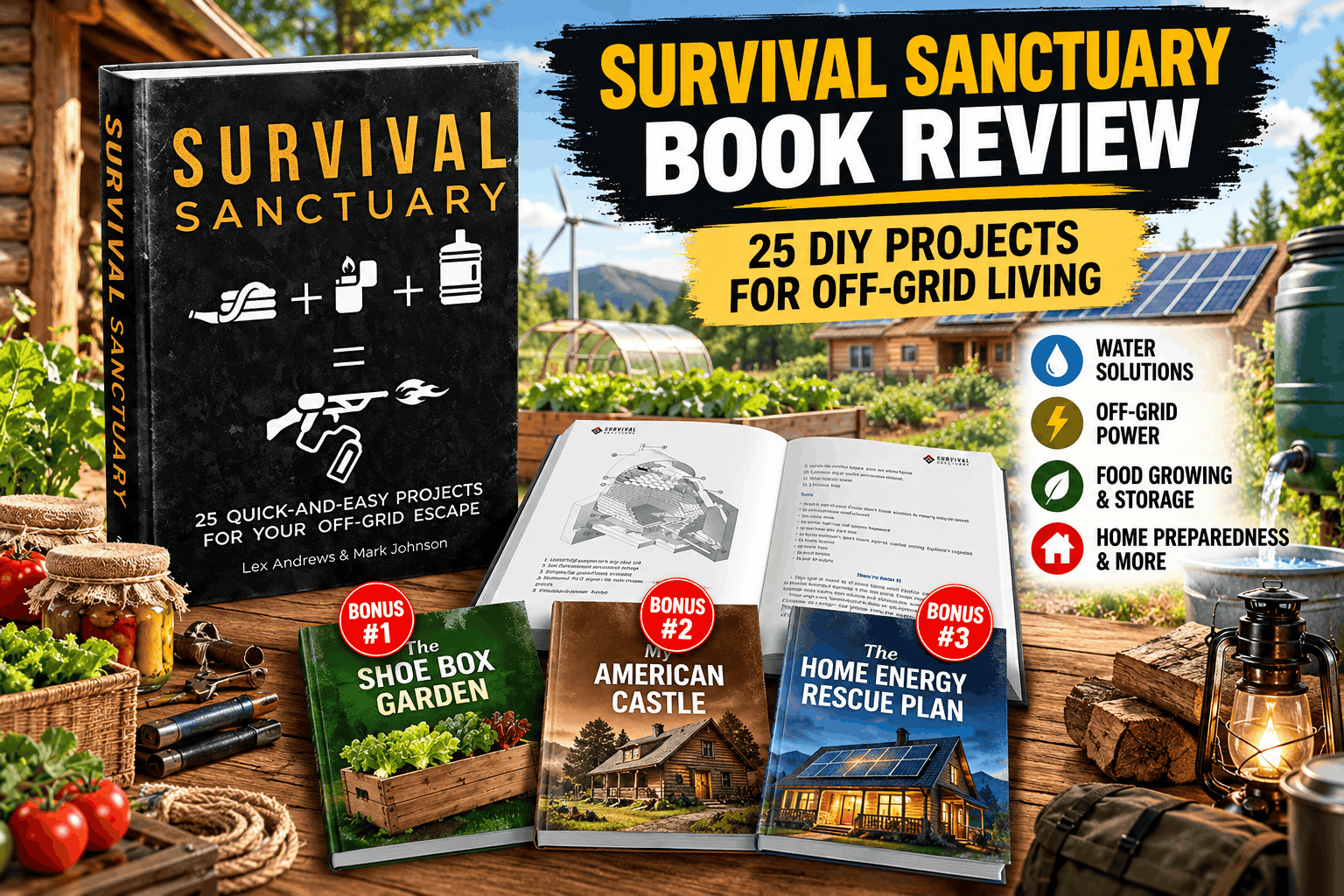
Survival Sanctuary Book: a review of the advertised DIY projects for off-grid preparedness.
Survival Sanctuary Book is a DIY preparedness guide advertised for people who want to become more self-reliant during emergencies, power outages, water shortages, and disruptions to everyday supplies. It focuses on practical projects involving water, electricity, food production, and storage.
Instead of relying entirely on store-bought emergency equipment, the Survival Sanctuary Book presents ideas for building useful systems at home with commonly available or salvaged materials. The sales page describes 25 projects, with illustrated instructions aimed at beginners and people interested in off-grid living.
But what does the Survival Sanctuary Book actually offer? In this review, we’ll examine its advertised projects, three bonus guides, potential benefits, limitations, safety considerations, and 60-day money-back guarantee to help you make a more informed decision.
Research-Based Review:, Based on published product information and research, we have not independently tested this product.
Survival Sanctuary Book: Quick Review
| Product | Survival Sanctuary Book |
| Product Type | Digital DIY survival and self-sufficiency guide |
| Advertised Projects | 25 DIY projects |
| Main Topics | Water, backup power, gardening, food preservation, and preparedness |
| Listed Price | $37 |
| Bonuses | Three additional digital guides advertised |
| Guarantee | 60-day money-back guarantee advertised by the seller |
| Best For | Readers interested in DIY preparedness and off-grid concepts |
Our initial assessment: The guide covers a broad range of preparedness topics. Its practical value will depend on the quality of its instructions, the suitability of each project for your circumstances, and any additional materials or skills required.
What Is the Survival Sanctuary Book?
The Survival Sanctuary Book is advertised as a digital guide containing 25 quick-and-easy DIY projects for self-sufficient living. The sales material attributes the approach to Mark Johnson and describes a method called S.C.A.R., although the effectiveness of that method has not been independently verified for this review.
The central idea is to help readers explore ways to manage some basic household needs when normal services or supplies become unavailable. These needs include water access, backup electricity, growing food, preserving supplies, and communicating during emergencies.
The sales page emphasizes illustrations, step-by-step guidance, and projects that may use ordinary or salvaged materials. However, the phrase “no special tools needed” should not be assumed to apply to every project. Construction requirements, local regulations, and safety precautions can vary considerably.
What Projects Are Included in the Survival Sanctuary Book?
According to the supplied product description, the Survival Sanctuary Book covers several areas of DIY preparedness. Here are the main categories highlighted in the seller’s material.
1. Water Collection and Storage
Water is an important part of household emergency planning. The advertised projects include rainwater collection and storage, a DIY well concept, and a homemade water-filtration project.
These ideas may help readers understand different approaches to water access. However, a homemade filter should not automatically be considered capable of making unsafe water drinkable. Removing visible particles is not the same as reliably removing disease-causing microorganisms or chemical contaminants.
Any drinking-water system needs to be appropriate for the water source and meet applicable safety requirements. Well construction may also require permits, professional assessment, and compliance with local groundwater regulations.
2. Backup Electricity and Off-Grid Power
The Survival Sanctuary Book advertises projects involving solar panels, a small wind turbine, a fuel-powered generator concept, and a water wheel for electricity generation.
These topics introduce different ways to think about backup power. Their usefulness depends on factors such as local weather, available space, equipment costs, power requirements, and maintenance.
The sales page makes broad claims about energy independence and reduced utility bills, but actual savings cannot be established from the promotional copy alone. Solar and wind systems also require appropriate electrical components, safe installation, and suitable storage if power is needed when generation stops.
Fuel-powered equipment presents additional risks, including fire and carbon monoxide poisoning. Never operate a fuel-burning generator indoors or in an enclosed area.
3. Small-Space Gardening and Food Production
Another advertised section of the Survival Sanctuary Book focuses on growing food in limited spaces. The sales material mentions indoor vertical gardening, square-foot gardening, a walipini-style underground greenhouse, and a wicking bed.
These approaches may interest apartment dwellers, homeowners with small yards, and people exploring home food production. Each method has different requirements for light, soil, drainage, temperature, growing space, and ongoing care.
Although the seller promotes low-maintenance growing, no garden is completely maintenance-free. Results depend on the crops selected, the growing environment, and the gardener’s experience.
4. Food Preservation and Storage
The advertised projects also include a solar dehydrator, a root cellar, and a DIY freeze-drying concept. The general aim is to help readers explore ways to preserve food and organize longer-term supplies.
Food preservation requires particular care because mistakes can lead to spoilage, foodborne illness, or unsafe storage conditions. Dehydrating meat and other potentially hazardous foods requires validated procedures. A root cellar must maintain suitable temperature, humidity, ventilation, and sanitation.
The sales page mentions preservation periods of many years for certain methods. Those periods should be treated as promotional claims rather than guarantees: safe storage life varies with the food, preparation method, packaging, moisture, temperature, and storage conditions.
5. Cooling and Emergency Communication
The Survival Sanctuary Book also advertises a DIY air-conditioning concept and a simple radio-related project inspired by historical improvised radios.
These subjects may broaden the guide beyond basic food and water preparation. Still, the effectiveness of a homemade cooling system depends on its design and local conditions. Likewise, a radio project may not provide reliable communication without suitable components, adequate reception, and compliance with applicable radio regulations.
6. Additional Home-Preparedness Topics
The seller mentions additional security-oriented projects and ways to protect belongings. Some advertised examples involve potentially dangerous devices and traps. We would not treat these as an automatic benefit: improvised defensive devices can injure household members, visitors, emergency responders, or other unintended people and may create legal liability.
For most households, safer starting points include tested smoke and carbon monoxide alarms, sturdy locks, appropriate exterior lighting, emergency contacts, and a clear family emergency plan.
Three Bonus Guides Advertised With the Survival Sanctuary Book
The supplied sales copy advertises three digital bonus guides with the Survival Sanctuary Book. Their inclusion and current availability should be confirmed on the checkout page before purchasing.
Bonus 1: The Shoe Box Garden
This bonus is described as a guide to growing food in limited spaces, including urban homes and small gardens. It may be relevant to readers who want to explore compact gardening or start producing a portion of their own food.
Bonus 2: My American Castle
The seller describes this guide as a home-security and preparedness manual. Because the promotional material references traps and improvised defensive devices, readers should prioritize lawful, non-injurious home security and avoid hazardous construction ideas.
Bonus 3: The Home Energy Rescue Plan
This bonus is advertised as a guide to backup electricity and energy storage, including batteries for emergency use. The practical value will depend on the accuracy of its recommendations and whether they are compatible with the reader’s equipment and power needs.
The seller assigns individual promotional values to these bonuses, but those values do not independently establish their market worth. Consider the actual content and usefulness of each guide rather than relying only on the advertised bundle valuation.
Potential Benefits of the Survival Sanctuary Book
Pros
- Broad range of subjects: The advertised 25 projects cover water, energy, food production, food storage, and other preparedness topics.
- DIY-focused approach: Readers interested in learning about practical household projects may appreciate the hands-on format.
- Small-space gardening ideas: Several advertised concepts are relevant to people with limited growing space.
- Digital delivery: The seller says the main product and bonus reports are available digitally.
- Illustrated instructions advertised: Diagrams and step-by-step explanations could make complex ideas easier to follow if they are clear and accurate.
- Additional material: Three bonus guides are advertised as part of the offer.
- Refund period advertised: The sales material states that a 60-day money-back guarantee is available, subject to the seller’s applicable terms.
Limitations to Consider Before Buying
Cons
- Independent testing is unavailable: We have not built or tested the advertised projects.
- Materials may cost extra: A $37 digital guide does not mean every project can be completed for $37 or less.
- Some projects require specialist knowledge: Electrical installations, wells, and food-preservation systems can involve substantial technical or regulatory requirements.
- Promotional claims need verification: Statements about very large savings, long preservation periods, or broad water-purification capabilities should not be accepted without supporting evidence.
- Some security topics may be unsafe: Improvised traps and harmful devices are not suitable solutions for ordinary household security.
- Digital content may not suit everyone: Readers who prefer physical books or professionally installed systems may want other options.
- Exact product page could not be accessed: We could not directly open the exact product URL supplied in the workbook, so the current checkout details and complete contents could not be independently confirmed.
How Much Does the Survival Sanctuary Book Cost?
The product information supplied for this review lists the Survival Sanctuary Book at $37. The sales copy also advertises three digital bonus guides as included in the offer.
Before ordering, confirm the final price, what the bundle includes, whether any optional products are selected, and whether any additional costs apply. Materials, tools, permits, installation, and maintenance are separate considerations that may increase the overall cost of carrying out a project.
The seller uses larger reference prices and savings claims in its promotion. Those figures should not be taken as proof that the package offers a particular monetary value.
Does the Survival Sanctuary Book Offer a Money-Back Guarantee?
The supplied product information lists a 60-day, 100% satisfaction money-back guarantee. The promotional text says buyers can request a refund within 60 days by contacting the seller through the details provided in the membership area or purchase confirmation email.
Because the exact product page was not accessible during this review, we could not independently verify the current refund process or all applicable conditions. Read the terms displayed at checkout and keep your order confirmation and support details if you decide to purchase.
Is the Survival Sanctuary Book Beginner-Friendly?
The seller markets the Survival Sanctuary Book to beginners as well as readers with more experience. The use of illustrations and step-by-step instructions could be helpful, but we cannot independently confirm how easy each project is to complete.
Some activities, such as starting a small garden or organizing emergency food supplies, may be manageable for beginners. Other activities, such as electrical work, water-well construction, and complex preservation systems, may require professional assistance or specialized equipment.
A sensible approach is to start with low-risk projects, read the full instructions before buying materials, and check relevant local requirements. Do not attempt a project simply because the sales page describes it as easy.
Important Safety Considerations
Safety Note
- Drinking water: Do not assume a homemade filter removes pathogens or chemical contaminants. Use a treatment method appropriate to the source and follow public-health guidance.
- Electricity: Follow electrical codes and equipment instructions. Have hazardous or complex installations assessed by a qualified professional.
- Generators: Never operate fuel-burning generators indoors, in garages, or near open windows and air intakes.
- Food storage: Use established food-safety procedures instead of relying on unverified shelf-life claims.
- Wells and underground structures: Check local permits, soil and groundwater conditions, ventilation, structural integrity, and collapse risks.
- Home security: Avoid improvised traps and devices designed to injure people. Use lawful, non-injurious protective measures.
This review is for general informational purposes and is not a substitute for professional engineering, electrical, water-treatment, or food-safety advice.
Who Should Consider the Survival Sanctuary Book?
The Survival Sanctuary Book may be worth considering if you enjoy DIY projects, want an introduction to off-grid living concepts, or are exploring ways to improve your household preparedness.
It may be less suitable if you expect a complete, independently verified solution for water purification, electricity generation, long-term food preservation, or home security without extra costs or technical knowledge.
If your main goal is emergency readiness, you can also begin with established basics: drinking water, shelf-stable food, essential medicines, lighting, batteries, communication plans, and a household emergency checklist. These can be useful regardless of whether you buy the guide.
Explore Survival Sanctuary
Review the current product details, included digital bonuses, price, and refund terms before deciding whether this DIY preparedness guide fits your needs.
The listed price is $37; verify the current price and terms on the seller’s checkout page.
Affiliate Disclosure: This article contains an affiliate link. If you purchase through it, we may earn a commission at no additional cost to you. This does not change our commitment to describing the product’s advertised features and limitations accurately.
Final Verdict: A Broad DIY Preparedness Guide
The Survival Sanctuary Book offers a wide-ranging collection of advertised DIY preparedness ideas, from small-space gardening and food storage to backup energy and water collection. Its broad subject coverage and digital format may appeal to readers who want to explore self-sufficient living.
However, the sales copy makes claims about performance, savings, and preservation that we have not independently verified. Some projects could also require additional materials, technical skills, permits, or professional installation. The advertised home-security bonus deserves particular caution where it discusses hazardous devices.
At the listed price of $37, the guide may interest readers who value a collection of project ideas and are willing to assess each one carefully. We would not recommend purchasing it solely on the promise of effortless energy independence, universally safe homemade water, or guaranteed long-term food storage.
Frequently Asked Questions
Who are the authors of the Survival Sanctuary Book?
The supplied promotional material attributes the guide to Mark Johnson and also names Lex Andrews and Mark Johnson on the product cover. We have not independently verified the authorship or their credentials.
Is the Survival Sanctuary Book a physical book or a digital product?
The sales copy says the guide and its three bonus reports are available digitally. Confirm the delivery format and access details on the checkout page before buying.
Does the Survival Sanctuary Book include 25 projects?
The seller advertises 25 DIY projects covering topics such as water, energy, gardening, food preservation, cooling, and communication. We have not independently inspected or tested every project in the complete guide.
Can the Survival Sanctuary Book make a household completely self-sufficient?
That outcome cannot be guaranteed. Self-sufficiency depends on location, resources, skills, infrastructure, maintenance, and the needs of the household. A guide can provide ideas, but it cannot guarantee independence from all outside services.
Does a homemade water filter always make water safe to drink?
No. A filter’s performance depends on its design and the contaminants present. Water that looks clear can still contain harmful microorganisms or chemicals. Use an appropriate, validated treatment method for the specific water source.
Is $37 enough to complete all the projects?
The listed $37 price is for the advertised guide offer, not a confirmed total construction budget. Tools, materials, components, permits, and professional services may cost extra.
What bonuses are advertised with the Survival Sanctuary Book?
The supplied sales copy lists The Shoe Box Garden, My American Castle, and The Home Energy Rescue Plan. Confirm their current inclusion and delivery details before placing an order.
Does the Survival Sanctuary Book have a refund policy?
The supplied product information advertises a 60-day money-back guarantee. Since the exact product page could not be opened during this review, check the current terms and refund instructions provided by the seller.
About the Author