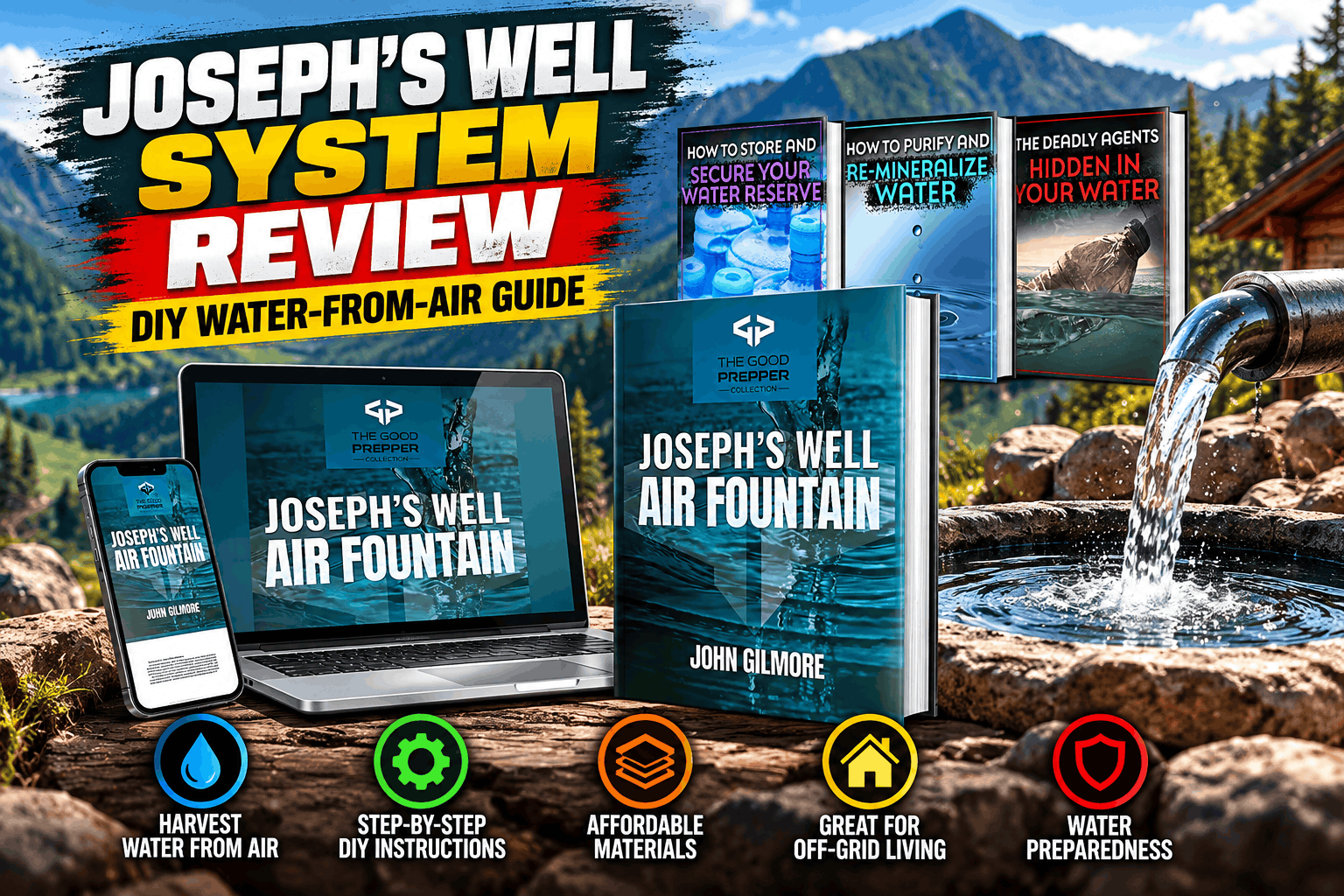
Josephs Well System Review examining the advertised DIY water-from-air guide and its key limitations.
Josephs Well system is marketed as a do-it-yourself guide for building a device that collects moisture from the air and turns it into water. Rather than shipping a finished water generator, the offer focuses on digital instructions, blueprints, a materials list, video guidance, and additional water-preparedness guides. The listed offer price is $39, although promotional popups on the sales page show a different price at times.
The idea may appeal to people interested in emergency planning, off-grid projects, and alternative water sources. However, a set of plans is not the same as a tested water-production appliance. Actual output depends on factors such as humidity, temperature, equipment design, power availability, and maintenance. The sales page also gives inconsistent output figures, so its performance claims deserve careful scrutiny.
This review looks at what the offer says it includes, its potential advantages, its limitations, and the safety questions buyers should consider before relying on a DIY atmospheric water collection project.
Research-Based Review:, Based on published product information and research, we have not independently tested this product.
Quick Review: Josephs Well System Review
| Product type | Digital DIY water-from-air guide |
|---|---|
| Listed price | $39 on the main offer; promotional popups may differ |
| Main contents advertised | Video guide, blueprints, schematics, materials list, and power guidance |
| Additional material | Three bonus guides and email support, as advertised |
| Refund policy | Sales page advertises a 60-day money-back guarantee |
| Independent testing | Not performed for this review |
| Best suited for | Readers researching DIY projects who understand the technical and safety requirements |
What Is Josephs Well System?
Josephs Well system is presented as a set of instructions for building a personal atmospheric water collection device. The sales page describes a process that draws moisture from surrounding air, condenses it, and collects the resulting water. It also discusses operating the project with conventional electricity or a small off-grid power setup.
The important distinction is that the buyer is purchasing instructions, not a ready-to-use appliance. You should expect to source components, assemble the equipment, follow electrical and mechanical instructions, and assess whether the finished setup is suitable for your environment.
The marketing uses emergency-preparedness and faith-based messaging to explain the product’s purpose. That presentation may appeal to some readers, but it does not independently establish the system’s output, reliability, affordability, or ability to provide safe drinking water.
What Does the Package Advertise?
According to the sales page, Josephs Well system includes several digital resources intended to help buyers understand and assemble the proposed project.
- Step-by-step video guide: Advertised walkthroughs intended to explain the build process.
- Blueprints and schematics: Visual references showing the proposed arrangement of components.
- Materials list: A list of parts and sourcing information, according to the seller.
- Power guidance: Instructions are advertised for grid-connected and off-grid configurations.
- Email support: The sales page says buyers can contact the seller for assistance.
These are advertised package contents, not independently inspected files. Before purchasing, review the checkout details and available product information to confirm exactly what is included and how access is delivered.
Three Advertised Bonus Guides
The sales page also lists three supplementary guides:
- How to Secure Your Water Reserves: Advertised guidance about storing and rotating water supplies.
- How to Purify and Mineralize Water: Additional material about water treatment methods.
- The Deadly Agents in Your Water: A report described as covering possible contaminants.
The presence of these guides does not guarantee that any particular treatment method is appropriate for a specific water source. Water treatment needs depend on the contaminants present and should follow reliable public-health guidance.
Water Output Claims Need Verification
One of the most important issues with Josephs Well system is the inconsistency in the seller’s own output figures. The main sales narrative mentions a system producing up to 50 gallons per day, while the FAQ later says the proposed setup can produce up to 10 gallons per day.
Those figures should not be treated as an established output rate. The page does not provide independent test results that demonstrate what a buyer-built unit will produce under defined temperature and humidity conditions. Atmospheric water collection is sensitive to local climate, system design, energy consumption, and operating conditions.
The page also promotes low construction and running costs. Those figures are seller claims, not a verified estimate for every build. The final cost can depend on parts, tools, replacement components, power requirements, filtration, and any testing needed to establish water quality.
Important water-safety qualification
Water condensed from air is not automatically safe to drink. Airborne contaminants, collection surfaces, tubing, storage containers, and microbial growth can affect water quality. Do not use a DIY system as a drinking-water source until its design, treatment, and water quality have been appropriately assessed. Use reliable testing and qualified guidance, especially if the water is intended for children, older adults, or anyone medically vulnerable.
Potential Advantages
What We Like About the Concept
- Educational format: Plans and videos may help readers understand the proposed assembly process.
- DIY approach: The offer is aimed at people who prefer learning about a project rather than buying a complete commercial appliance.
- Preparedness focus: The accompanying material discusses water storage and alternative power arrangements.
- Extra learning resources: The seller advertises three additional water-related guides.
- Relatively low entry price: The main page lists a $39 digital offer, before any additional costs associated with building the device.
Limitations and Questions to Consider
What to Keep in Mind
- Not a finished generator: Buyers must obtain components and carry out the build themselves.
- Conflicting output figures: The page mentions both 50 gallons and 10 gallons per day without providing independent validation.
- Additional costs: Parts, tools, power equipment, treatment, maintenance, and water testing may add to the advertised access price.
- Climate dependence: Water collection can vary significantly with humidity and temperature; dry conditions may be especially challenging.
- Potability is not established: Marketing language about clean or drinkable water is not a substitute for water-quality evidence.
- Limited independent evidence: We did not independently test the guide or build a unit from its instructions.
Who Might Consider This Guide?
Josephs Well system may be worth investigating for readers who enjoy hands-on projects, have access to suitable tools, can assess electrical and mechanical requirements, and are willing to verify the results rather than relying solely on marketing claims.
It is less suitable for someone who needs an immediate, dependable drinking-water supply, expects a ready-made appliance, or cannot safely assemble and maintain technical equipment. People planning for emergencies should maintain a reliable stored-water supply and a tested backup plan instead of depending on an unverified DIY build.
Price and Refund Policy
The main sales page lists Josephs Well system at $39 and advertises a 60-day money-back guarantee. Promotional overlays may display a different offer, so the actual checkout price and applicable terms should be checked before payment.
We have not independently tested the refund process. Read the terms at checkout, save your order confirmation, and keep a copy of any applicable refund instructions. Also remember that a refund policy does not establish that the underlying water-production claims are accurate.
Want to Review the Official Offer?
Check the current package details, checkout price, and refund terms directly before deciding.
Final Verdict
Josephs Well system is a digital DIY guide marketed to people interested in collecting water from air and preparing for possible water disruptions. Its advertised blueprints, videos, materials list, and bonus guides may interest hands-on learners. However, buyers should distinguish the price of the guide from the total cost of constructing and safely operating a system.
The most significant concern is the sales page’s conflicting output claims—up to 50 gallons in one section and up to 10 gallons in its FAQ—along with the absence of independent test results in the material reviewed. The guide should not be treated as proof that a home-built unit will produce a particular amount of water or that its output will be safe to drink.
Our conclusion on Josephs Well system is cautious: consider it an instructional product to investigate, not a guaranteed water solution. Confirm the offer details, assess the technical demands, budget for parts and testing, and maintain a dependable alternative water plan.
FAQs
Can I use a DIY atmospheric water project as my only emergency water supply?
No. Until a system has demonstrated dependable output and safe water quality under your actual conditions, maintain stored water and another reliable source. Emergency planning should not depend on unverified production claims.
What should I check before building a water-from-air device?
Assess local humidity and temperature, power consumption, component suitability, condensation and drainage design, cleaning needs, materials that contact water, and a validated method for checking water quality. Seek qualified help for electrical or water-treatment questions.
Does a higher water-output claim mean the device will work better in every climate?
No. Output depends on operating conditions and design. A number quoted in promotional material should not be assumed to apply to a different location or a DIY build without supporting test data.
About the Author