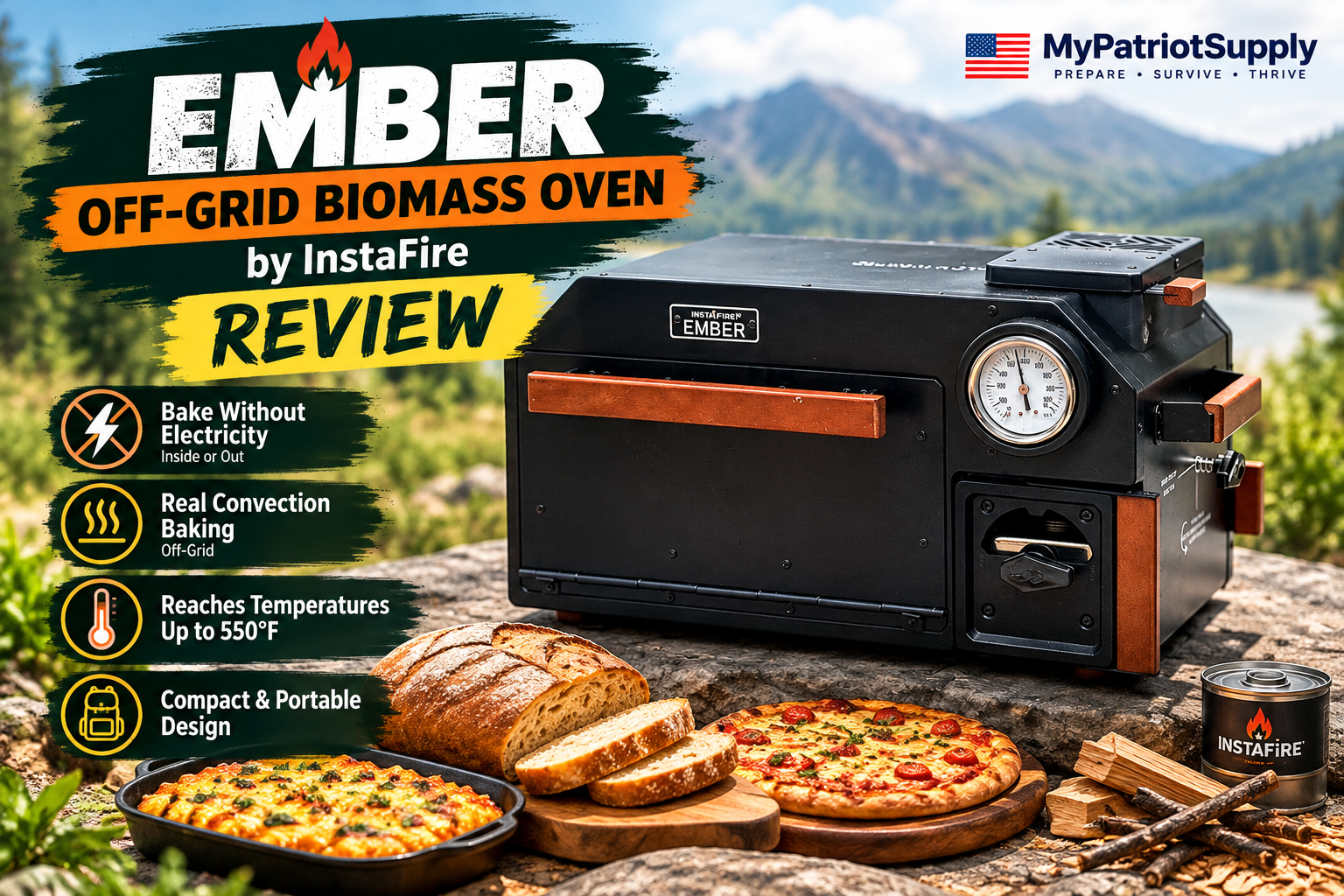
Ember Off Grid Biomass Oven is designed for off-grid baking and roasting when household electricity is unavailable. When emergencies strike, grid failures occur, or you want to embrace a more self-reliant lifestyle in the great outdoors, cooking without electricity becomes an essential capability. While many preppers and outdoor enthusiasts rely on standard camp stoves to boil water or cook simple skillet meals, baking, roasting, and true culinary versatility often get left behind when the power grid goes down. Enter the Ember Off Grid Biomass Oven by InstaFire—a specialized unit designed to bring traditional baking and roasting capabilities directly to your off-grid campsite, emergency prep stash, or backyard preparedness setup.
In this comprehensive, independently researched review tailored for readers of Survival Essentials, we examine the Ember Off Grid Biomass Oven from top to bottom. We will examine the documented specifications, fuel options, safety distinctions, reported preheat observations, practical limitations, and questions to consider before buying. Our goal is to give you a clear, unbiased look at this unique biomass oven so you can make an informed purchasing decision. Note: We have not personally tested this oven, and our review is based on independent research of manufacturer claims and publicly available reports.
Direct Answer: What Is the Ember Off Grid Biomass Oven?
The Ember Off Grid Biomass Oven by InstaFire is a portable cooking appliance designed for baking and roasting when electricity is unavailable. The manufacturer lists a maximum temperature of up to 550°F and describes compatibility with biomass fuels for outdoor use, while InstaFire Canned Heat+ is the fuel specified for indoor baking when used as directed.
Weighing 17.5 pounds (with a shipping weight of 21.40 pounds) and constructed from cold-rolled steel fused with aluminum, the Ember Off Grid Biomass Oven features an internal heat-distribution manifold, a two-layer burn chimney, a dedicated burn box, an adjustable air-control knob, and a built-in thermometer. While outdoor biomass burning is intended strictly for open-air use, the unit’s compatibility with clean-burning canned heat options provides versatile placement possibilities when following manufacturer safety guidelines.
Understanding the Need for Off-Grid Baking
Most emergency cooking discussions revolve around boiling water for freeze-dried pouches, cooking rice, or frying canned meats over a single-burner backpacking stove. While these methods keep you alive, they severely limit your meal diversity. Over time, subsisting entirely on boiled or pan-fried foods during an extended grid-down scenario can lead to menu fatigue and a lack of comforting, home-baked sustenance.
Bread, biscuits, roasted vegetables, baked casseroles, and DIY pizzas provide immense psychological comfort and steady caloric intake during stressful situations. Traditional home ovens are entirely dependent on municipal power grids or natural gas lines. If those fail, your indoor kitchen range becomes little more than a heavy metal storage box. Emergency preparedness requires redundancy, and having a dedicated, fuel-agnostic oven ensures that you can maintain normal culinary routines even when civilization pauses.
The Ember Off Grid Biomass Oven is designed to provide an alternative way to bake and roast without household electricity. This review does not compare its cooking results with campfires or propane ovens.
Design, Build Quality, and Specifications
Examining the physical construction of any survival tool is critical before trusting it in an emergency. The manufacturer lists cold-rolled steel fused with aluminum as the construction material. The supplied research does not establish long-term durability or thermal-efficiency results.
Weighing in at 17.5 pounds, the EMBER oven strikes a calculated balance between portability and heft. At 17.5 pounds, the unit is a consideration for buyers prioritizing portability. The supplied research does not establish how stable it is on uneven surfaces or how effectively it retains heat.
Understanding the internal capacity of an off-grid oven prevents frustrating cooking failures. The EMBER unit features specific dimensional parameters designed to accommodate standard camping bakeware:
- Oven Opening: 5 inches tall by 11 inches wide, allowing you to slide shallow pans and baking sheets in and out smoothly.
- Baking Chamber: 5 inches tall by 11 3/4 inches wide by 8 inches deep, providing room for small casserole dishes, pie tins, and loaf pans. Note that potential pan-fit limitations exist; users should measure their cookware carefully.
- Unit Weight: 17.5 pounds, making it portable enough for weekend camping trips while remaining robust for long-term emergency caches.
- Shipping Weight: 21.40 pounds when ordered and delivered in its original packaging.
Regulating heat is the hardest part of off-grid baking. Without a digital thermostat or gas dial, you rely heavily on physical indicators. The EMBER oven addresses this challenge with an integrated exterior thermometer, an adjustable air-control knob, a heat-distribution manifold, a two-layer burn chimney, and a burn box to manage oxygen flow and internal temperatures up to a manufacturer-stated maximum of 550°F.
Fuel Versatility and Safety Distinctions
One of the strongest selling points of any off-grid cooking appliance is its fuel independence. Being locked into a single proprietary fuel source can become a major vulnerability during extended supply chain disruptions. The EMBER Off-Grid Biomass Oven excels in this category by accepting a wide array of fuel materials.
True to its name, the oven is designed to harness natural biomass gathered directly from your surroundings or stocked in your preparedness supplies:
- Wood Chips and Twigs: Readily available in wooded environments, small dry branches and wood chips burn in the outdoor burn box.
- Charcoal: For sustained, even baking temperatures akin to a traditional Dutch oven, lump charcoal or briquettes provide thermal output.
- Paper and Cardboard: Useful as kindling to jumpstart combustion when paired with dry twigs.
The manufacturer specifies InstaFire Canned Heat+ for indoor baking when used as directed. Biomass fuels—including twigs, leaves, wood chips, paper, and charcoal—are for outdoor use only. Survival Essentials has not independently verified indoor safety. Follow the current product manual, all warnings and ventilation requirements, and applicable local fire and building rules. Never use biomass fuels in a garage, tent, vehicle, or enclosed shelter.
Evaluating Preheat Times and Performance Reports
When analyzing equipment performance, it is vital to distinguish between manufacturer-stated claims and independently reported observations. The manufacturer states that the oven preheats in approximately 15 to 20 minutes depending on environmental conditions.
However, independent reviews—such as testing reported by Practical Self Reliance / Elxef—observed different results, noting that it took roughly 75 minutes to reach 350°F when utilizing canned heat. Survival Essentials did not conduct a controlled test to reconcile these figures, and no independent biomass preheat data is available in our research notes. Buyers should keep in mind that real-world preheat times will vary significantly based on ambient temperatures, wind, and fuel choice.
Pros and Cons of the EMBER Off-Grid Biomass Oven
To help you weigh your options objectively, here is a balanced breakdown of the advantages and potential drawbacks of the EMBER oven based on verified product details and general reports.
The Advantages (Pros)
- Fuel Independence: Accepts multiple fuel sources including wood chips, twigs, charcoal, paper, and InstaFire Canned Heat+.
- True Baking Capability: Brings baking and roasting functionality off-grid, expanding emergency meal options far beyond boiling water.
- Sturdy Construction: Built from cold-rolled steel fused with aluminum for long-term durability.
- Built-In Controls: Features an integrated exterior thermometer and an adjustable air-control knob for temperature monitoring.
- Portable Form Factor: Weighs 17.5 pounds, making it manageable for vehicle transport and emergency storage.
The Drawbacks (Cons)
- Preheat Discrepancy: Independent reports suggest longer preheat times under certain conditions compared to manufacturer estimates.
- Weight and Bulk: At 17.5 pounds (21.40 lbs shipping), it is far too heavy for backpacking or ultralight hiking.
- Pan Limitations: The compact chamber size requires careful cookware selection; standard home baking pans may not fit.
- Accessories Sold Separately: Carrying cases and bundle packages may require separate purchases; verify what is included at checkout.
Pre-Purchase Checklist and Alternatives
Before purchasing the EMBER Off-Grid Biomass Oven, review this quick checklist to ensure it matches your preparedness strategy:
- Verify current pricing (noted as $199.95 during research) and stock status on the official product page.
- Confirm whether accessories like carrying cases are included or require separate purchase.
- Measure your existing camping bakeware against the 5″ x 11 3/4″ x 8″ baking chamber dimensions.
- Review the Disaster Warranty terms—note that this is a disaster-replacement program handled at the company’s discretion (tied to a shelf-life period or 25 years if unspecified), rather than a standard defects warranty. Read current seller terms before buying.
If you are exploring alternatives, consider a traditional cast-iron Dutch oven placed over charcoal briquettes for outdoor baking without specialized equipment, or propane-powered camp ovens for alternative fuel setups. Each option presents unique trade-offs in weight, fuel availability, and temperature control.
Where to Buy the EMBER Off-Grid Biomass Oven
Check the manufacturer’s official product page for current pricing, availability, warranty details, and purchasing options.
Frequently Asked Questions
Can the EMBER Off-Grid Biomass Oven be used indoors?
Biomass fuels such as wood chips, twigs, and charcoal are for outdoor use only. The manufacturer specifies InstaFire Canned Heat+ for indoor baking when used as directed, but Survival Essentials has not independently verified indoor safety. Follow the current manual, warnings, ventilation requirements, and local fire and building rules.
What is the actual preheat time?
The manufacturer states 15 to 20 minutes, while independent reports observed approximately 75 minutes to reach 350°F using canned heat. Actual preheat times depend heavily on ambient temperature, wind, and fuel type.
What size baking pans fit inside the baking chamber?
The internal baking chamber measures 5 inches tall by 11 3/4 inches wide by 8 inches deep, with an oven opening of 5 inches tall by 11 inches wide. Always measure your cookware beforehand.
What is the unit weight and shipping weight?
The unit weighs 17.5 pounds, and the shipping weight is 21.40 pounds.
Are accessories included with the purchase?
Carrying cases and bundle items may be sold separately. Verify exact package contents on the official seller page before checkout.
Does this unit require electricity?
No, the EMBER oven is entirely off-grid and operates without electrical power.
What are the warranty and return policies?
The seller uses the labels “Disaster Warranty” and “Easy Returns.” The supplied research describes the Disaster Warranty as a disaster-replacement program handled at the company’s discretion, tied to the product’s shelf-life period or 25 years if no period is stated; it is not a general warranty for defects or ordinary wear. The exact return window and conditions were not confirmed in the supplied research. Read the current written warranty and return terms before ordering.
About the Author