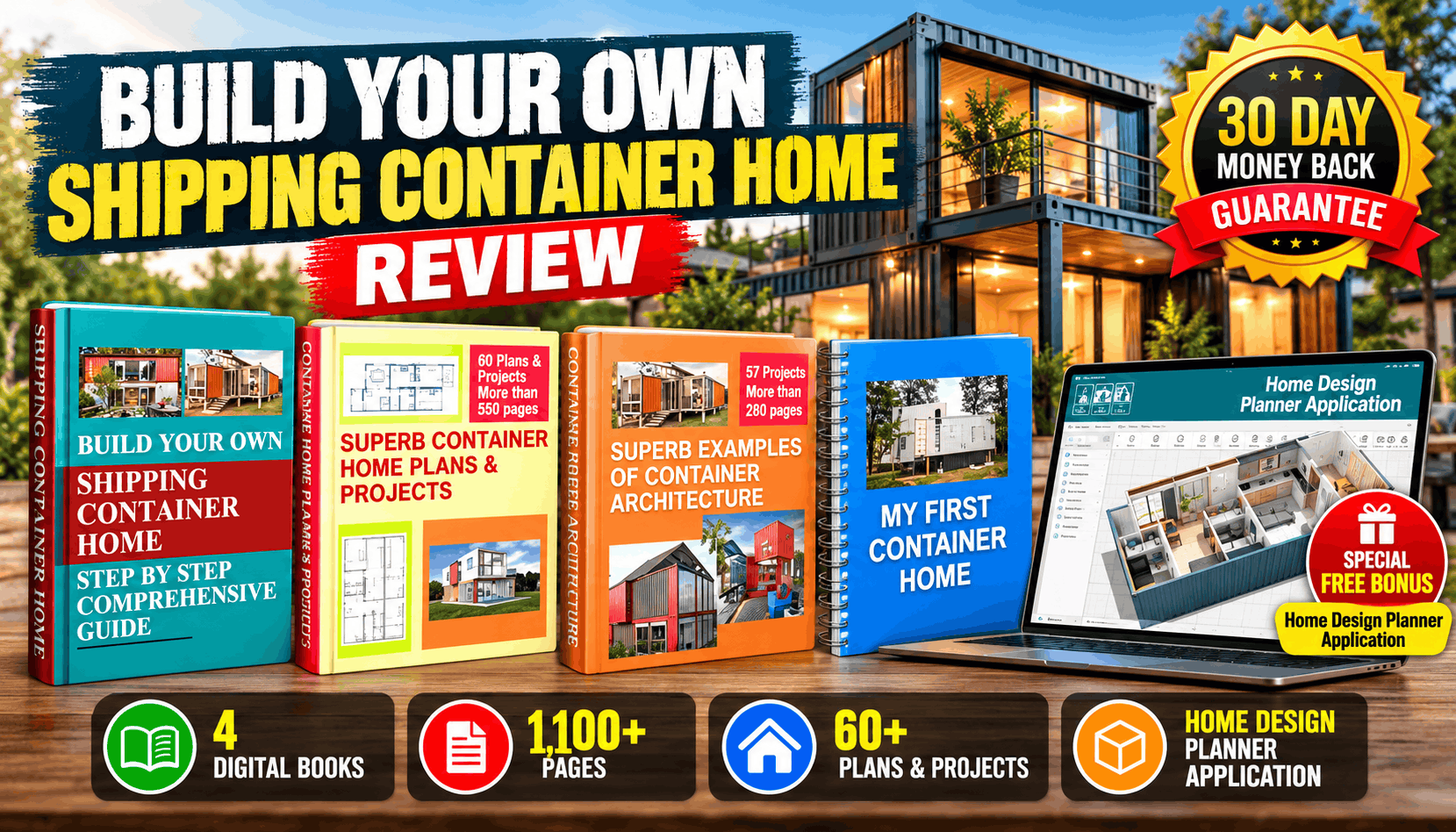
The four digital books and home design planner advertised in the container home package.
Build Your Own Shipping Container Home is a digital guide package designed for people interested in planning and constructing a home from shipping containers. The offer includes four books covering construction basics, container home plans, architectural examples, and a first-time building experience, plus a Home Design Planner Application bonus. But does this package provide useful guidance for your project? In this Build Your Own Shipping Container Home review, we examine the advertised contents, price, refund policy, potential benefits, and important limitations before you decide whether to buy.
Shipping container homes can offer interesting design possibilities, but building one still involves planning, site preparation, structural considerations, insulation, utilities, permits, and budgeting. A digital guide may help you understand these stages, but it cannot replace local building approval or professional engineering advice.
Research-Based Review:, Based on published product information and research, we have not independently tested this product.
Quick Review: Build Your Own Shipping Container Home
| Product type | Digital container home construction and design guide package |
|---|---|
| Listed price | $47; confirm the current checkout price |
| Main package | Four digital books advertised as totaling more than 1,100 pages |
| Bonus | Home Design Planner Application |
| Main topics | Container selection, planning, layouts, foundations, insulation, utilities, and design inspiration |
| Refund policy | Seller advertises a 30-day, 100% money-back guarantee |
| Delivery | Digital PDF files; no physical books or container are delivered |
| Independent testing | Not performed for this review |
Important: The package is educational material. Land, shipping containers, construction materials, labor, permits, and professional services are separate expenses.
What Is Build Your Own Shipping Container Home?
Build Your Own Shipping Container Home is marketed as a comprehensive digital reference package for people who want to learn about converting shipping containers into residential spaces or other buildings. The seller combines construction guidance with design inspiration and examples of completed container home projects.
The product copy describes a package of four books with more than 1,100 pages in total. Topics include choosing containers, developing floor plans, preparing foundations, making modifications, planning insulation and utilities, and learning from other container home designs.
The package is aimed at people who are researching a future build, first-time container home owners, and readers who may be considering container construction as a business opportunity. Its potential usefulness depends on the quality and relevance of the information and how well it matches the reader’s location, project, skills, and budget.
It is important to understand what you are purchasing. Build Your Own Shipping Container Home is a digital information package, not a finished home, a construction service, or a shipment of physical books. The seller says the PDF files are delivered through Google Drive, so buyers should check the current delivery instructions and account requirements before ordering.
What Is Included in the Package?
According to the supplied sales-page copy, Build Your Own Shipping Container Home contains four books and a Home Design Planner Application bonus.
Book 1: Build Your Own Shipping Container Home – Step by Step Comprehensive Guide
The main guide is described as a 215+ page reference covering more than 180 topics related to container home construction and design. The advertised subjects include container characteristics, planning, budgets, floor plans, site layouts, purchasing containers, pre-purchase inspections, delivery coordination, repairs, modifications, foundations, doors, windows, insulation, roofing, and utilities.
The book is intended to provide an organized starting point for readers who want to understand the different stages of a container home project. The sales copy presents it as a step-by-step guide, but we have not independently reviewed the full book or verified that it contains every detail needed for a specific build.
Book 2: Superb Container Home Plans & Projects
The second book is advertised as a 550+ page, full-color digital collection featuring 60 container home plans and projects. The product copy says it includes 22 floor plans and interior examples, along with 38 additional container home projects presented with plans or 3D models and photographs.
For readers who are still deciding how a container home might look, this collection may provide design inspiration and examples to discuss with an architect or designer. Plans and photographs are useful reference material, but any design must be adapted to local building codes, site conditions, structural requirements, and the intended use of the property.
Book 3: Superb Examples of Container Architecture
The third book is described as a 280+ page, full-color collection showcasing 60 container homes from around the world. The sales page highlights interior and exterior photographs intended to help readers explore different styles and layouts.
This book appears to focus more on visual inspiration than on providing a complete construction procedure. It may help readers compare design ideas and identify features they would like to discuss with a qualified building professional.
Book 4: My First Container Home
The fourth book is described as a 56-page account of a person’s experience building a container home with friends. According to the product copy, it discusses the planning process, challenges encountered, and how problems were addressed.
First-hand accounts can help readers understand the practical decisions involved in a project. However, one person’s experience may not apply to every location, container type, design, or construction budget.
Bonus: Home Design Planner Application
The seller advertises a Home Design Planner Application that can be used to draw floor plans, arrange furniture, and view designs in 3D. The sales copy also describes planning interior spaces, kitchens, bathrooms, gardens, pools, and exterior areas.
The application may help with early visualization and layout ideas. Before relying on it for a real project, check its current compatibility, features, licensing terms, and whether its output is suitable for the level of design work you need. A home design application does not replace professional architectural drawings or structural engineering where those are required.
What Can You Learn From Build Your Own Shipping Container Home?
The advertised content covers several major stages of a container home project. These are the subjects described by the seller, rather than independently verified outcomes.
Choosing and Inspecting Shipping Containers
The main guide advertises information about container characteristics, purchasing, pre-purchase inspections, delivery coordination, rust, doors, locking mechanisms, flooring, and repairs. These topics are relevant because the condition and suitability of a container can affect the cost and complexity of a project.
Buyers should inspect a container’s condition and history carefully. Corrosion, damage, previous cargo use, and flooring materials may affect whether it is appropriate for residential conversion. Professional inspection may be worthwhile before committing to a purchase.
Planning Layouts and Home Designs
The package promotes floor plans, 3D models, interior photographs, exterior examples, and design ideas. These resources may help readers compare single-container layouts with larger designs that combine multiple containers.
However, a layout that looks appealing in a book may need substantial changes to work on a particular site. Access, daylight, ventilation, room dimensions, structural modifications, and local requirements all influence the final design.
Foundations and Structural Modifications
The sales copy says the main guide covers footings, foundations, container modifications, doors, windows, and other construction details. These are important subjects because cutting openings or joining containers can affect structural performance.
Use the material as an introduction to the questions involved, not as a substitute for engineering calculations or professional guidance. A qualified local professional can determine what structural work is appropriate for the intended design and site.
Insulation, Roofing, and Utilities
The advertised topics also include heaters, insulation, roofs, green roof concepts, electricity, water, and mechanical systems. These areas affect comfort, energy use, moisture control, and the long-term practicality of a container home.
Container homes need careful attention to condensation, thermal bridging, ventilation, and climate-specific insulation. Electrical, plumbing, and heating installations must also meet applicable safety standards and local codes.
Potential Benefits of Build Your Own Shipping Container Home
The following potential benefits relate to the advertised package and its subject matter. They should not be interpreted as proof that the product will reduce construction costs or guarantee a successful build.
What May Appeal to Buyers
- Multiple reference books: The package brings together construction guidance, design examples, project plans, and a first-time building account.
- Visual design inspiration: The advertised plans, photographs, and 3D models may help readers explore different layouts.
- Broad topic coverage: The main guide advertises subjects ranging from container purchasing to insulation and utilities.
- Digital access: PDF files can be read on compatible devices after download.
- Design planner bonus: The advertised application may help with early layout and furniture planning.
- Project preparation: A structured collection may help readers identify questions to research before hiring professionals or buying materials.
These points explain why the package may be useful to some readers. We have not independently tested the books or the design application, and the advertised benefits do not guarantee lower construction costs or a particular completion timeline.
Build Your Own Shipping Container Home Pros and Cons
Pros
- Advertises four digital books covering construction, plans, architecture, and a first-time building experience.
- The package is described as containing more than 1,100 pages.
- Includes advertised floor plans, 3D models, and color photographs of container homes.
- Covers purchasing, inspection, delivery, foundations, modifications, insulation, and utilities.
- Includes a Home Design Planner Application bonus according to the sales page.
- The listed price is $47, with a seller-advertised 30-day money-back guarantee.
Cons
- We have not independently reviewed or tested the complete package.
- The digital product does not include a physical container, land, materials, or construction labor.
- Construction costs and timelines depend on local conditions and the specific project.
- Some work may require architects, structural engineers, licensed tradespeople, or permits.
- The design planner’s current compatibility and detailed features should be confirmed.
- Seller claims about savings and ease of construction are not guaranteed outcomes.
Can Build Your Own Shipping Container Home Save You Money?
The seller presents container homes as a potentially economical way to build housing and says the package can help readers avoid wasted time and money. Better planning and understanding the construction process may help people ask better questions and compare options, but actual savings are not guaranteed.
The total cost of a container home can include much more than the containers themselves. Buyers may need to budget for land, transport, cranes, foundations, structural changes, insulation, windows, doors, roofing, electrical and plumbing systems, heating and cooling, interior finishes, permits, inspections, and professional fees.
Costs vary significantly by location, design, labor availability, container condition, and the amount of work performed by the owner. A project that begins with inexpensive used containers can become costly if the containers require extensive repairs or the design needs substantial modifications.
Before starting, prepare a detailed budget and obtain local quotes. Use Build Your Own Shipping Container Home as a potential research resource, but verify important recommendations against current building requirements and professional advice.
Are Container Homes Strong, Safe, and Energy Efficient?
The sales page promotes container homes as strong, adaptable, and potentially energy efficient. Shipping containers are designed for cargo transport, but converting one into a home changes how it is used and may require significant modifications.
Cutting openings, joining containers, adding roofs, and altering load-bearing elements can affect structural behavior. The suitability of a design depends on its engineering, construction quality, foundation, site, and exposure to local weather conditions. Do not interpret marketing phrases such as “nature proof” or “fire proof” as guarantees.
Energy efficiency also depends on insulation, airtightness, windows, shading, ventilation, and climate. A steel shell can transfer heat readily, so careful thermal and moisture design is important. Professional guidance can help ensure that the completed home is safe, comfortable, and appropriate for its environment.
Important Building Codes, Permits, and Safety Considerations
Important safety note: A shipping container is not automatically approved for residential use. Before construction, check local zoning rules, building codes, foundation requirements, structural design, fire safety, insulation, ventilation, and utility regulations with the relevant authorities and qualified professionals.
Do not rely on a general digital guide as the sole basis for structural, electrical, or plumbing work. Obtain professional assistance where required.
Requirements differ across locations, so a design that is accepted in one jurisdiction may need substantial changes elsewhere. Confirm that your property can legally be used for the intended purpose before purchasing containers or beginning work.
Build Your Own Shipping Container Home Price and Refund Policy
The workbook and supplied product copy list the price of Build Your Own Shipping Container Home at $47. The seller describes this as a one-time payment for the four-book digital package and the Home Design Planner Application bonus. Confirm the current checkout price and included deliverables before purchasing.
The sales page advertises a 30-day, 100% money-back guarantee. Review the current refund conditions and keep your order confirmation. We have not independently tested the refund process, so the seller’s current terms should be treated as authoritative for eligibility and procedure.
The seller says the books are delivered as PDF files through Google Drive and notes that a Google account may be required for access. Check the delivery instructions carefully and make sure you can access the files before ordering.
Who Might Consider This Package?
Build Your Own Shipping Container Home may interest people who are at the early research stage and want a collection of construction topics, design examples, and project plans in one package. It may also appeal to readers who want visual inspiration before discussing a proposed design with an architect or builder.
It may be less suitable for buyers expecting a complete set of approved construction drawings for their specific property, guaranteed savings, or a substitute for licensed professionals. The package should be treated as a reference resource rather than a ready-to-build solution.
Buyer Checklist Before Ordering
- Confirm that the current price is $47 and check the final checkout total.
- Verify that all four advertised books and the Home Design Planner Application are included.
- Review the 30-day refund terms and keep the purchase confirmation.
- Check the digital delivery process and any Google Drive account requirements.
- Compare the advertised topics with your own project and experience level.
- Research local zoning, permits, building codes, and engineering requirements.
- Prepare a realistic budget for land, containers, transport, construction, utilities, and professional fees.
Where to Check Build Your Own Shipping Container Home
If the advertised contents match your needs, review the current offer and refund terms before purchasing. Use the books and design examples to support your research, then verify project-specific decisions with local building authorities and qualified professionals.
Review the Current Offer
Check the included books, design planner, digital delivery details, and 30-day refund terms before ordering.
Affiliate Disclosure: This article contains an affiliate link. If you purchase through it, we may earn a commission at no additional cost to you. This does not change our commitment to describing the product’s advertised features and limitations accurately.
Final Verdict on Build Your Own Shipping Container Home
Build Your Own Shipping Container Home is marketed as a broad digital reference package containing four books and a Home Design Planner Application bonus. The advertised coverage of container purchasing, planning, floor plans, foundations, insulation, utilities, and design examples may be useful for readers exploring this type of housing.
The main limitation is that a collection of books cannot guarantee a successful or inexpensive build. Site conditions, local regulations, engineering, materials, labor, and the quality of the final design will determine whether a project is practical. We have not independently tested the package or verified the seller’s savings claims.
Our assessment: Consider Build Your Own Shipping Container Home as a planning and design reference if you want to learn more about container housing. Confirm the included files and refund terms before purchasing, and consult qualified professionals before making structural or safety-critical decisions.
Frequently Asked Questions
Is Build Your Own Shipping Container Home a physical book package?
No. The sales page describes a digital product delivered as PDF files. It does not include physical books or a shipping container, and the seller says download links are delivered through Google Drive.
How many books are included in the package?
The seller advertises four books: a step-by-step comprehensive guide, container home plans and projects, examples of container architecture, and My First Container Home. The package is described as containing more than 1,100 pages in total.
Does the package include design software?
Yes, the sales page advertises a Home Design Planner Application bonus for drawing layouts and visualizing spaces in 3D. Confirm the current software details, compatibility, and access terms before purchasing.
What is the refund period for Build Your Own Shipping Container Home?
The supplied product copy advertises a 30-day, 100% money-back guarantee. Review the current seller terms at checkout and keep your purchase confirmation in case you need to request a refund.
About the Author